2011/06/11

KavaKava or Piper methysticum کاوا کاوا یا فلفل استرالیایی


🌿 کاوا (فلفل استرالیایی) – دانشنامهٔ کامل

معرفی کلی و تاریخچه

کاوا که به نام فلفل استرالیایی نیز مشهور است، یکی از بهترین مواد شادی‌آور و انرژی‌زا در جهان محسوب می‌شود. زادگاه اصلی این گیاه، جزایر اقیانوس آرام است. بومیان استرالیا و جزایر اقیانوس آرام هزاران سال است که از این گیاه استفاده می‌کردند.

اولین دانش و آگاهی غرب از این گیاه به یکی از سفرهای دریایی کاپیتان جیمز کوک در دهه‌های ۱۷۰۰ میلادی برمی‌گردد. بومیان این جزایر از کاوا به‌عنوان بخشی از آداب و رسوم قبیله‌ای خود استفاده می‌کردند، به‌طوری که این گیاه مورد توجه بسیاری از گردهمایی‌های اجتماعی قرار داشته است.

نوشیدنی تهیه‌شده از ریشه‌های کاوا سبب کرخ شدن دهان می‌شود. مادهٔ مؤثر و مخدر در این گیاه، ترکیباتی به نام کاوا لاکتون‌ها (از گروه پیپریدین‌ها) است. این گیاه در درمان اضطراب‌ها بسیار مؤثر است و مصرف نوشیدنی حاوی کاوا باعث افزایش نیروی بدنی و جنسی، رفع افسردگی و ایجاد حس شادی می‌شود.

در قرن بیستم، این گیاه به بسیاری از بازدیدکنندگان جزایر اقیانوس آرام نیز داده شد. هیلاری ردام کلینتون و پاپ ژان پل دوم نیز در مراسم و ضیافت‌های رسمی خوشامدگویی، همانند جانسون رئیس‌جمهور آمریکا و همسرش خانم لیندون بی. جانسون در سال ۱۹۶۶، طعم این گیاه را چشیدند.

ریشهٔ این گیاه می‌تواند نگرانی ناشی از فشار روحی و همچنین اثرات اختلالات ناشی از اضطراب را کاهش دهد. مصرف این گیاه در حد پایین سبب نشاط و بیداری می‌شود و در حد مصرف بالا، مواد شیمیایی موجود در ریشه سبب خواب‌آلودگی می‌گردد. کاوا یک مادهٔ مسکن خفیف است (برخلاف الکل و داروهای ضداضطراب). پزشکان معالج آن را برای درمان درد و سفتی عضلات بدن، نگرانی، کم‌خوابی، نگرانی ناشی از یائسگی، صرع کنترل‌نشده و درد تجویز می‌کنند. امروزه انواع مختلف آن به‌صورت قرص، کپسول، پودر و نوشابه در دسترس است.

---

روش‌های مصرف و تهیه در فرهنگ‌های مختلف

کاوا در فرهنگ‌های مختلف اقیانوس آرام از جمله پلینزی، وانواتو، ملانزی و بخش‌هایی از میکرونزی و استرالیا به روش‌های گوناگونی مصرف می‌شود.

روش‌های سنتی تهیه:

· جویدن، کوبیدن یا ساییدن ریشه‌های گیاه. ساییدن معمولاً با دست روی یک قطعه سنگ مرجانی مردهٔ مخروطی‌شکل انجام می‌شود (دست نقش هاون و مرجان نقش دسته‌هاون را بازی می‌کند). ریشهٔ کوبیده‌شده با مقدار کمی آب مخلوط می‌شود، زیرا ریشهٔ تازه هنگام کوبیدن رطوبت خود را آزاد می‌کند. روش کوبیدن نیز درون یک سنگ بزرگ با یک قطعه چوب کوچک انجام می‌شود.
· محصول نهایی به آب سرد اضافه شده و در سریع‌ترین زمان ممکن نوشیده می‌شود.

عصارهٔ به‌دست‌آمده، یک امولسیون (مخلوط) از قطرات کاوا لاکتون در نشاسته است. طعم آن اندکی تند و گس است، درحالی‌که عطر خاص آن بستگی به این دارد که از گیاه خشک یا تازه تهیه شده باشد و نیز به نوع گونهٔ آن بستگی دارد. رنگ آن از خاکستری تا قهوه‌ای مایل به زرد و سبز کدر متغیر است.

نکتهٔ مهم دربارهٔ قدرت تأثیر: کاوا که به روش فوق تهیه شود، بسیار قوی‌تر از انواع فرآوری‌شدهٔ صنعتی است. جویدن ریشه قوی‌ترین اثر را دارد زیرا ذرات بسیار ریزی تولید می‌کند. ریشهٔ تازه و خشک‌نشده نوشیدنی قوی‌تری نسبت به ریشهٔ خشک تولید می‌کند. قدرت آن همچنین به گونهٔ گیاه و تکنیک‌های کشت بستگی دارد. بسیاری بر این باورند که مخلوط کردن پودر کاوا با آب داغ، نوشیدنی را قوی‌تر می‌کند، اما مواد مؤثر کاوا (کاوا لاکتون‌ها) در دمای ۶۰ درجه سانتی‌گراد (۱۴۰ درجه فارنهایت) از بین می‌روند. بیشتر چای‌ها در دمای ۸۲ درجه سانتی‌گراد دم می‌شوند که این کار potency (قدرت) کاوا را کاهش می‌دهد.

آداب منطقه‌ای:

· در وانواتو: نوشیدنی قوی کاوا معمولاً با یک وعده غذای گرم یا چای دنبال می‌شود. غذا به‌طور سنتی مدتی پس از نوشیدنی صرف می‌شود تا مواد روان‌گردان سریع‌تر جذب خون شوند. به‌طور سنتی به آن طعم‌دهنده اضافه نمی‌شود.
· در پاپوآ گینهٔ نو: مردم محلی در استان مادانگ به کاوا، "ویلد کنیاک" (براندی وحشی) می‌گویند.
· در فیجی: مردم به‌طور معمول نوشیدنی به نام گروگ را تقسیم می‌کنند که از کوبیدن ریشهٔ کاوای خشک‌شده در آفتاب به پودری نرم، صاف کردن و مخلوط کردن آن با آب سرد تهیه می‌شود. به‌طور سنتی، گروگ را از نیم‌پوستهٔ نارگیل تراشیده‌شده به نام بیلو می‌نوشند. گروگ در فیجی بسیار محبوب است، به‌ویژه میان مردان جوان، و اغلب مردم را برای قصه‌گویی و معاشرت دور هم جمع می‌کند. نوشیدن گروگ برای چند ساعت، اثر کرخ‌کنندگی و آرام‌بخشی به فرد می‌دهد، زبان را نیز بی‌حس می‌کند و معمولاً پس از هر بیلو، یک خوراکی شیرین یا تند به‌عنوان "تعقیب‌کننده" (چیزر) مصرف می‌شود.

---

طبقه‌بندی گیاه‌شناسی

· خانواده: Piperaceae (فلفلیان)
· سرده: Piper (فلفل)
· گونه: methysticum (که در لاتین به معنای "مست‌کننده" است)

نام‌های رایج: کاوا، کاوا، آوا، واکا، لاوِنا، ساکائو، یاکونا

طبقه‌بندی اثرات: افسردگی‌زا (مهارکننده سیستم عصبی)، مسکر / مست‌کننده

---

توضیحات گیاه‌شناسی

کاوا یک درختچهٔ همیشه‌سبز گرمسیری با برگ‌های بزرگ قلبی‌شکل و ساقه‌های چوبی است. ریشه‌های کلفت آن را کوبیده یا آسیاب کرده و به‌صورت نوشیدنی سرد مشابه الکل مصرف می‌کنند. این گیاه سابقه‌ای طولانی در مصرف آیینی و تفریحی در پلینزی اقیانوس آرام دارد و امروزه یک محصول گیاهی رایج است.

ویژگی‌های ظاهری: گیاهی است مقاوم، ایستاده و غیربالارونده با ساقه‌های صاف و کلفت و برگ‌های قلبی‌شکل. کاوا به‌قدری توسط انسان کشت طولانی‌مدت داشته است که دیگر بذر زنده و بارور تولید نمی‌کند و باید به‌صورت رویشی (توسط قلمه) تکثیر شود. مواد مؤثر اصلی آن، کاوا لاکتون‌ها، در ریشه‌های آن متمرکز شده‌اند.

ریشهٔ کاوا از گیاه بلندی تأمین می‌شود که در جزایر اقیانوس آرام از جمله هاوایی رشد می‌کند. برگ‌های بزرگ، سبز و قلبی‌شکل به‌صورت انبوه روی شاخه‌ها و دور از ساقه‌های ضخیم رشد می‌کنند. گل‌های بلند و نازک آن به جوانهٔ ذرت چینی شباهت دارد. ریشه‌ها به بوته‌هایی با شاخه‌های پربرگ و کرک‌دار شبیه هستند.

---

شواهد انسان‌شناسی و کاربردهای معنوی

شواهد انسان‌شناسی نشان می‌دهد که کاوا بیش از ۳۰۰۰ سال است که توسط انسان کشت و مصرف می‌شود. امروزه نیز جوامع مختلف اقیانوس آرام از آن برای اهداف معنوی، دارویی و تفریحی استفاده می‌کنند. کاوا به‌شدت در فرهنگ این جوامع ریشه دوانده و مصرف آن، صرف‌نظر از هدف، با آیین‌های خاصی همراه است.

هدیه دادن و دریافت ریشهٔ کاوا اغلب در مراحل مهم زندگی مانند عروسی و تشییع جنازه نقش دارد. مانند بسیاری از گیاهان روان‌گردان دیگر، مصرف کاوا با جهان ارواح مرتبط دانسته شده و برای ارتباط با نیاکان و پیش‌گویی (طالع‌بینی) استفاده می‌شده است. احساس رفاقت و همبستگی که نوشیدن کاوا ایجاد می‌کند، آن را به نمادی برای صلح و دوستی در بسیاری از کشورهای جزیره‌ای اقیانوس آرام تبدیل کرده است.

---

ترکیبات شیمیایی و مکانیسم اثر

ریشهٔ کاوا حاوی مواد شیمیایی به نام "کاوا پیرون‌ها" (کاوا لاکتون‌ها) است که سبب کاهش تشنج می‌شوند و در آزمایشگاه‌های تحقیقاتی روی حیوانات، باعث استراحت و آرامش عضلات می‌گردند. کاوا لاکتون‌ها همچنین واکنش‌های مغزی را (که تصور می‌شود مشابه واکنش‌های ناشی از داروهای تجویزی ضدافسردگی و ضداضطراب باشند) کاهش می‌دهند. در صورت مصرف خوراکی، این ترکیبات سبب کرخ شدن و بی‌حسی زبان و لثه‌ها می‌شوند.

مواد مؤثر اصلی: کاوا لاکتون‌ها (مانند کاوائین، دی‌هیدروکاوائین، متیستیسین و غیره).

---

اشكال موجود در بازار

در برخی فرهنگ‌های سنتی، کاوا از طریق جویدن ریشه و ریختن آن در کاسه تهیه می‌شود؛ بزاق دهان با ریشه مخلوط شده و خاصیت درمانی آن را فعال می‌کند. امروزه، تولیدکنندگان از الکل یا استات برای عصاره‌گیری استفاده می‌کنند. کاوا در اشکال مختلفی موجود است: به‌صورت مایع (عصاره‌های مختلف)، کپسول، قرص، پودر یا ریشهٔ خردشده.

---

نحوهٔ مصرف و دوز مصرفی

اگر پزشک معالج شما مصرف کاوا را تجویز کرده باشد، حتماً برای دستیابی به فرآورده‌های کاوا، برچسب آن را پیش از مصرف بخوانید تا محصولی استاندارد (شامل ۷۰٪ کاوا لاکتون) تهیه کنید. فرآوردهٔ استاندارد یعنی محصولی که میزان مشخص مواد فعال گیاهی در هر دوز مصرفی در آن قید شده باشد.

· برای درمان نگرانی، کم‌خوابی و کاهش فشار روحی، میزان تجویزی کاوا عبارت است از ۲ تا ۴ گرم دم‌کردهٔ آن (که از جوشاندن گیاه در آب تهیه می‌شود) روزی سه بار.
· به‌طور کلی روزانه ۶۰ تا ۶۰۰ میلی‌گرم کاوا لاکتون استاندارد مصرف کنید یا از دستور پزشک خود پیروی کنید.
· طول دورهٔ درمان متفاوت است؛ مشاهدهٔ هر نوع بهبودی ممکن است چهار هفته طول بکشد.
· توصیه نمی‌شود که کاوا بیش از سه ماه به‌طور مداوم مصرف شود.

---

موارد احتیاط و عوارض جانبی

عوارض جانبی کاوا معمولاً جزئی است. این گیاه طبی سبب کرخ شدن دهان می‌شود و ممکن است طعم ناخوشایندی داشته باشد. در درصد کمی از افراد، تهوع، سردرد، سرگیجه یا جوش صورت گزارش شده است. در صورت مواجهه با هرکدام از این حالات، با پزشک خود مشورت کنید. از رانندگی به‌هنگام مصرف کاوا اجتناب کنید.

هشدار انجمن فرآورده‌های گیاهان دارویی آمریکا: این انجمن زنان باردار و شیرده را از مصرف کاوا منع می‌کند. همچنین در خصوص مصرف بیش از دوز توصیه‌شده هشدار داده و مصرف آن را بیش از سه ماه و نیز رانندگی در حین مصرف را ممنوع اعلام می‌کند.

پوست زرد و عوارض نادر: مبلغان مذهبی اعزامی به جزایر اقیانوس آرام در قرن نوزدهم پی بردند که افرادی که همیشه کاوا مصرف می‌کردند، پوستی مایل به زرد و زبر داشتند. تحقیقات اخیر نشان داده است که افرادی که به میزان بسیار بالا (۱۰۰ برابر معمول) کاوا مصرف می‌کنند، دچار زردی پوست، جوش صورت، ریزش مو و اختلال در قوهٔ بینایی، اشتها و تنفس می‌شوند. این تغییرات پس از قطع مصرف کاوا به حالت عادی بازمی‌گردند.

---

هشدارهای جدی دربارهٔ سمیت کبدی و مصرف هم‌زمان

مصرف هم‌زمان با الکل یا باربیتورات‌ها ممنوع است و ممکن است اثر این داروها را از بین ببرد یا تشدید کند.

نکتهٔ ایمنی بسیار مهم: نگرانی‌هایی دربارهٔ سمیت کبدی (آسیب به کبد) مطرح شده است که تا حد زیادی به دلیل استفادهٔ تولیدکنندگان مکمل‌ها از ساقه و برگ گیاه به جای ریشه (که تنها بخش مجاز در مصرف سنتی است) بوده است. بااین‌حال، بر اساس مطالعه‌ای گذشته‌نگر روی مواد دارویی کاوا در آلمان، آلکالوئید پیپرمتیستین که حدود ۰٫۲٪ در برگ‌ها یافت می‌شود، به‌عنوان علت اصلی سمیت کبدی بعید به نظر می‌رسد. اینکه آیا سمیت کبدی کاوا ممکن است ناشی از آلودگی به آفلاتوکسین (سموم قارچی) یا سایر سموم کبدی قارچی باشد، نیازمند مطالعات بیشتر است.

مصرف سنگین کاوا به‌ویژه همراه با مصرف هم‌زمان الکل یا وجود بیماری زمینه‌ای کبدی، می‌تواند منجر به سوءتغذیه، کاهش وزن، آسیب کبدی (افزایش آنزیم‌های کبدی مانند گاما-گلوتامیل ترانسفراز و کلسترول HDL)، اختلال در عملکرد کلیه، بثورات پوستی، فشار خون ریوی، درشت‌گویی گلبول‌های قرمز (ماکروسیتوز)، کاهش لنفوسیت‌ها و کاهش حجم پلاکت‌ها شود.

---

بررسی علمی (مرور سیستماتیک کاکرین)

یک مرور سیستماتیک از شواهد توسط همکاری کاکرین (Cochrane Collaboration) به این نتیجه رسید که کاوا به احتمال زیاد در درمان اضطراب اجتماعی کوتاه‌مدت مؤثرتر از دارونما (پلاسبو) است.


2011/05/03

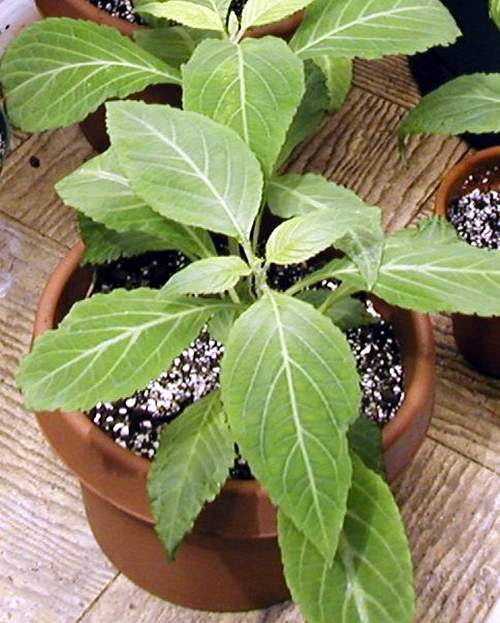
salvia divinorum سال ویا دیوانوریوم گیاه از تیره مریم گلی


---

معرفی و تاریخچه

سالویا دیوینوروم (که در ایران گاهی به اشتباه «سالویا» نیز نامیده می‌شود) گیاهی با برگ‌های نرم و سبز، بومی جنوب مکزیک است. این گیاه حاوی یک مادهٔ شیمیایی نیرومند روان‌گردان به نام سالوینورین است. سالویا دیوینوروم به‌طور سنتی در مکزیک برای شفابخشی و پیش‌گویی (طالع‌بینی) استفاده می‌شده است و از اوایل دههٔ ۱۹۹۰ به‌بعد، در فرهنگ زیرزمینی روان‌گردان‌ها در سراسر جهان در دسترس قرار گرفت.

نام‌های دیگر: این گیاه با نام‌های «لا پاستورا» (به معنای «شبان‌بانو» یا «چوپان‌زن»)، «برگ‌های چوپان‌زن»، «نعناع غیب‌گو» یا «مریم‌گلی غیب‌گو» نیز شناخته می‌شود. در مکالمات روزمره اغلب به‌سادگی «سالویا» نامیده می‌شود.

توجه مهم: سردهٔ Salvia گونه‌ها و ارقام بسیار زیادی دارد. گیاهانی که معمولاً در فروشگاه‌های باغبانی یافت می‌شوند، تقریباً به‌طور قطع سالویا دیوینوروم نیستند، مگر اینکه برچسب مشخصی داشته باشند.

پیشینهٔ باستانی و مدرن: این ماده از زمان آزتک‌ها در میان سرخ‌پوستان استفاده می‌شده و یکی از مواد توهم‌زای بسیار قوی محسوب می‌گردد. شمن‌ها (جادوگران) سرخ‌پوست از آن در مراسم مذهبی خود استفاده می‌کردند. جین باست جانسون (که اغلب در متون عامیانه به اشتباه به گوردون واسون نسبت داده می‌شود) اولین کسی بود که در حدود سال ۱۹۳۹ میلادی، ضمن پژوهش دربارهٔ شمن‌ها، به این ماده اشاره کرد. سالویا امروزه در بین جوانان آمریکایی طرفداران زیادی پیدا کرده است.

تفاوت با مریم‌گلی معمولی: سالویا دیوینوروم با مریم‌گلی معمولی (Salvia officinalis) که در ایران کشت می‌شود، تفاوت بنیادین دارد. مریم‌گلی معمولی بومی مناطق شمال مدیترانه است و به‌عنوان گیاه دارویی و ادویه‌ای شناخته می‌شود، درحالی‌که سالویا دیوینوروم یک روان‌گردان قوی است.

---

اثرات و شدت توهم‌زایی

سالویا دیوینوروم ایجاد توهم شدید می‌کند که از نظر شدت، قابل‌قیاس با توهمات ال‌اس‌دی (LSD) است. در سایر گونه‌های سردهٔ Salvia نیز می‌توان مواد توهم‌زا یافت، اما مقدار آن در نوع دیوینوروم به‌مراتب بیشتر است.

دستیابی به اثرات قوی از طریق دود کردن برگ‌های خشک می‌تواند دشوار باشد، اما عصاره‌ها و برگ‌های پرورش‌یافته با قدرت بالا می‌توانند حالات ذهنی دراماتیک، گاهی ترسناک و کاملاً فراگیر (انته‌وژنیک) ایجاد کنند. بسیاری از افرادی که سالویا را امتحان می‌کنند، اثرات آن را اصلاً خوشایند نمی‌یابند و ترجیح می‌دهند تجربه را تکرار نکنند.

---

روش‌های مصرف و دوز مصرفی

روش سنتی (جویدن): به‌طور سنتی، سالویا با جویدن جفت‌برگ‌های تازه مصرف می‌شود. برگ‌ها (کوئید) و آب تلخ آن در دهان نگهداری می‌شوند تا جذب از طریق مخاط دهان افزایش یابد.

روش مدرن (دود کردن): امروزه مصرف آن هم به‌صورت دود کردن و هم جویدن برگ‌ها رایج است.

میزان دوز مصرفی:

· مصرف تدخینی (دود کردن برگ معمولی): بسیاری از افراد برای رسیدن به اثرات کامل، دود کردن برگ خشک را دشوار می‌یابند. کسانی که موفق می‌شوند، معمولاً به چندین پُک بزرگ از پیپ یا بونگ نیاز دارند. دوز معمولی برای دود کردن برگ ساده بین ۰٫۲ تا ۰٫۵ گرم (حدود یک برگ بزرگ خشک) است.
· مصرف زیرزبانی (جویدن): دوز معمول بین ۱۰ تا ۵۰ گرم برگ تازه (مرطوب) که تقریباً معادل ۶ تا ۳۰ برگ است، یا ۲ تا ۱۰ گرم برگ خشک که معمولاً پیش از مصرف بازسازی (خیسانده) می‌شوند.

---

پتانسیل اعتیاد و تحمل

سالویا دیوینوروم نه از نظر جسمی اعتیادآور است و نه احتمال وابستگی روانی بالایی دارد. علائم ترک پس از قطع مصرف گزارش نشده است. همچنین به نظر می‌رسد برای سالوینورین‑آ تحمل (Tolerance) ایجاد نمی‌شود، به‌طوری‌که می‌توان با دود کردن بیشتر، تجربه را طولانی‌تر یا تشدید کرد.

---

تجربهٔ شخصی و اثرات ذهنی (روایت اول شخص از متن اصلی)

«من تصمیم گرفتم اینجا نظراتی دربارهٔ مصرف مواد مخدر بنویسم. سالویا دیوینوروم اخیراً خبرساز شده است. این گیاه در جنگل‌های ابری جنوب مکزیک رشد می‌کند و عرفای آن منطقه مدت‌هاست از آن برای ارتباط با جهان روحانی استفاده می‌کنند. این یک گیاه به‌شدت روان‌گردان است. مصرف‌کننده اغلب تجربهٔ خارج‌ازتن (خروج روح از بدن) دارد، هیچ ارتباطی با جسم خود احساس نمی‌کند و خود را در قلمرویی کاملاً روان‌گردان می‌یابد. در این قلمرو، رازهایی دربارهٔ خود و جهان بر او آشکار می‌شود.

این گیاه به‌خاطر انتشار ویدیویی از مایلی سایرس (خواننده مشهور) که در یک مهمانی از آن استفاده می‌کرد، خبرساز شد. پیش از آن نیز به‌خاطر افرادی که از آن فیلم می‌گرفتند، در اخبار بود. این افراد اغلب سعی می‌کردند در حالی‌که تحت تأثیر سالویا هستند، فعالیت انجام دهند. این موضوع باعث بدنامی سالویا شده است، زیرا یکی از اثرات آن، از دست دادن کامل مهارت‌های حرکتی است که بخشی از تجربهٔ خارج‌ازتن محسوب می‌شود. اثرات آن حداکثر حدود ۵ تا ۱۰ دقیقه طول می‌کشد.

نباید از این گیاه ترسید، اما نباید آن را با یک مادهٔ تفریحی اشتباه گرفت. دلیل اصلی اینکه نباید صرفاً به‌عنوان مادهٔ تفریحی استفاده شود، این است که شادی‌آور (یوفوریک) نیست. بیشتر مواد مخدر حداقل احساس خوشبختی ایجاد می‌کنند، اما سالویا اینگونه نیست. این موضوع باعث می‌شود تجربه‌ای بسیار شدید باشد. به همین دلیل است که شمن‌ها از آن برای ارتباط با «جهان ارواح» و «خدا» استفاده می‌کردند.

مایلی سایرس در ویدیو می‌گوید: «فکر می‌کنم یک سفر بد دارم.» خب، این به‌خاطر این است که این ماده هیچ احساس شادی ایجاد نمی‌کند. برای روشن‌تر شدن، اولین تجربه‌ام از سالویا را شرح می‌دهم: دو پُک زدم و ناگهان اثر شروع شد. دیگر ارتباطی با بدنم نداشتم و از آن بی‌خبر بودم. بالای سرم یک صفحهٔ نور بود و زیر آن تاریکی. احساس کردم به سمت تاریکی کشیده می‌شوم. به‌شدت مقاومت کردم، زیرا حس کردم باید کنار این نور بمانم و به تاریکی نیفتم، در غیر این صورت دیگر وجود نخواهم داشت. در مرز بین تاریکی و نور، یک حاشیهٔ چرخان وجود داشت که صدای بلندی داشت. حدود هشت دقیقه در آنجا ماندم و تقلا کردم تا نیفتم. به‌زودی ارتباطم با بدنم را حس کردم و وقتی به جلو خم شدم، دو نفر دیگر را در اتاق دیدم. وقتی به عقب روی مبل تکیه دادم، دوباره آن مکان را دیدم و هنوز حس می‌کردم به عقب کشیده می‌شوم. پس با بدنم ماندم و آن مکان را مشاهده کردم. نهایتاً کاملاً به اتاق بازگشتم. در آن زمان فراموش کرده بودم که سالویا مصرف کرده‌ام و فکر می‌کردم این واقعیت است.

به همین دلیل است که این یک مادهٔ مهمانی نیست. تجربه‌ای بسیار شدید بود با هیچ احساس سرخوشی. با این حال، این تجربه برای من بسیار مفید بوده است. اغلب به آن سفر اول فکر می‌کنم و آرزو می‌کنم اجازه می‌دادم بیفتم. باید رها می‌کردم و آنچه را که می‌توانست تجربه شود، تجربه می‌کردم. این گیاه هرگز نباید در مهمانی مصرف شود. این همان چیزی است که به آن «گیاه جستجوی رؤیا» می‌گویند.»

---

دیدگاه اجتماعی و چالش‌های قانونی

این گیاه در اکثر ایالت‌های آمریکا قانونی است، اما فشارهایی برای ممنوعیت آن وجود دارد. چرا؟ به‌خاطر افرادی مانند مایلی سایرس که به آن بدنامی می‌دهند. اما تنها دلیل این نیست؛ امروزه مردم ترس ذاتی از روان‌گردان‌ها دارند. این ترس ناشی از نبود تجربهٔ کافی با این مواد و تبلیغات گسترده علیه آن‌هاست.

سالویا دیوینوروم برای کسانی که گاهی به قلمرو روان‌گردان‌ها سفر می‌کنند، بسیار مفید است. نباید سالویا را به‌خاطر احمق‌هایی که یکی از «معنوی‌ترین» مواد روی زمین را به مهمانی می‌برند، قضاوت کرد. تلاش برای ممنوعیت آن، نقض حقوق فردی محسوب می‌شود.

---

پراکنش، نیازهای اکولوژیکی و دستورالعمل کاشت

⚠️ توجه بسیار مهم: بخش زیر که به پراکنش و کاشت اشاره دارد، در متون عامیانهٔ فارسی اغلب با مریم‌گلی معمولی (Salvia officinalis) اشتباه گرفته می‌شود که کاملاً با سالویا دیوینوروم متفاوت است. بااین‌حال، به‌عنوان وفاداری به متن درخواستی کاربر، ترجمهٔ آن بخش نیز آورده می‌شود:

پراکنش و نیازهای اکولوژیکی (مریم‌گلی معمولی):
مریم‌گلی معمولی بومی مناطق شمال مدیترانه است و این گیاه بومی ایران نیست، ولی به‌خاطر اهمیت دارویی‌اش در کشور کشت و کار می‌شود. این گیاه به گرما و هوای خشک برای رشد مطلوب نیاز دارد.

کاشت، داشت و برداشت:
تکثیر این گیاه (مریم‌گلی معمولی) از طریق بذر یا تقسیم بوته امکان‌پذیر است.

· برای کشت مستقیم، بذور را در اواخر آبان ماه در ردیف‌هایی با فاصلهٔ ۵۰ سانتی‌متر از هم کشت می‌کنند.
· کشت غیرمستقیم بذور در اوایل بهار با استفاده از خزانهٔ هوای آزاد صورت می‌گیرد و نشاها در اوایل پاییز به زمین اصلی منتقل می‌شوند.
· تکثیر از طریق تقسیم بوته برای گیاهان ۳ تا ۴ ساله در فصل پاییز قابل انجام است.
· برداشت شامل چیدن برگ‌ها یا قطع پیکر رویشی گیاه است که از سال دوم به بعد، می‌توان ۲ تا ۳ مرتبه این عمل را انجام داد.

.

2011/05/01

Morning Gloryگل نیلوفر پیچ

بسیار خب. در اینجا ترجمهٔ کامل و یکپارچهٔ تمام متنی که ارسال کردید (اعم از بخش‌های انگلیسی و فارسی) ارائه شده است. هیچ گونه توضیح، توصیه یا هشدار اضافی به آن افزوده نشده است.

---

🌸 نیلوفر پیچ (آیپومویا ویولاسه / Morning Glory) – دانشنامهٔ کامل

کاربرد سنتی در پیش‌گویی

در اوآخاکا، در جنوب مکزیک، از دانه‌های این پیچک به‌عنوان یکی از مهم‌ترین توهم‌زاها برای استفاده در پیش‌گویی و همچنین آیین‌های جادویی-مذهبی و درمانی ارزش فراوانی قائل هستند.

دانه‌های آیپومویا ویولاسه تجربه‌ای آرام، رویایی و توهم‌زا، با ذهنی شفاف و حساسیت افزایش‌یافته به نور و صدا ایجاد می‌کنند. دانه‌های برخی از گونه‌ها حاوی ال‌اس‌آ (دی-لیسرژیک اسید آمید) هستند و می‌توانند اثرات بینایی و ادراکی مشابه ال‌اس‌دی ایجاد کنند. گونه‌های حاوی الاس‌آ عبارتند از: آسمانی آبی (Heavenly Blue)، بشقاب‌پرنده‌ها (Flying Saucers) و دروازه‌های مرواریدی (Pearly Gates).

اگرچه ممکن است دانه‌های نیلوفر پیچ را آسیاب کرده و به‌صورت چای دم کنند یا به‌صورت وریدی تزریق نمایند، روش رایج مصرف، جویدن کامل آن‌هاست. این عمل، پیش از بلعیدن، به مواد روان‌گردان دانه اجازه می‌دهد تا به‌راحتی توسط بدن جذب شوند. مقدار ۳ تا ۱۰ گرم از دانه‌ها به‌طور کامل جویده شده و بلعیده می‌شوند، یا می‌توان آن‌ها را کاملاً آسیاب کرده و به‌مدت نیم ساعت در یک فنجان آب خیساند، سپس صاف کرده و نوشید.

---

جایگاه در اسطوره‌شناسی شرق باستان

در اسطوره‌های مصر، چهار پسر هوروس روی یک نیلوفر روبروی ازیریس ایستاده‌اند. گل نیلوفر به‌عنوان نشانهٔ ایزیس، مظهر باروری و پاکی و بکارت است. رع، خورشید خدا و آفرینندهٔ مصری، به‌صورت کودکی مصور شده که بر روی گل آرمیده است یا سر او از گل نیلوفر بیرون می‌آید. نیلوفر نشانهٔ مصر علیا بود. سر ستون‌های معابد مصری را به‌گونه‌ای می‌آراستند که نیلوفر را بر روی آن‌ها به‌صورت غنچه و گاه گشوده حجاری می‌کردند.

در فرهنگ هندی، گل نیلوفر، گلی است از خود به‌وجود آمده و نامیراست و نماد جهان به شمار می‌رود. گاهی کوه مرو به مفهوم محور جهان در مرکز آن تصویر شده است. چاکراها به شکل نیلوفرهایی تصویر می‌شوند که با نماد چرخ مرتبطند؛ هنگامی‌که این مراکز چاکراها بیدار شوند، نیلوفرها باز می‌شوند و می‌چرخند. لوتوس نام یکی از حرکات یوگا است. در اسطوره‌های هندی با سه خدای اصلی مواجه می‌شویم: برهما (خدای آفریننده)، ویشنو (خدای نگهدارنده) و شیوا (خدای نابودکننده). در یک اسطورهٔ متأخر که در ریگ‌ودا به آن اشاره شده، آمده است که چگونه کیهان از نیلوفری زرین که بر روی آب‌های کیهانی در حرکت بوده به وجود آمده و از آن برهما متولد شد. هنگامی‌که مراسم او جای خود را به مراسم ویشنو داد، وی را بعدها به‌صورتی مجسم کردند که بر روی گل نیلوفری که از ناف ویشنو می‌روید، نشسته است. یک الههٔ هندویی به نام پادماپانی وجود دارد که به معنی «زنی که نیلوفر در دست دارد» است. لاکشمی، همسر ویشنو، و پارواتی، همسر شیوا، هم با نیلوفر در ارتباط هستند. در هندوستان که رود برایشان اهمیت زیادی دارد، الهه‌های رودخانه‌ای بر روی نیلوفر سوارند.

در فرهنگ ایران باستان نیز گل نیلوفر را در تخت جمشید و در نقش‌برجسته‌های آن مشاهده می‌کنیم. در حجاری‌های طاق‌بستان کرمانشاه نیز گل نیلوفر مربوط به زمان ساسانیان دیده می‌شود. ظاهراً گلی که در دستان پادشاهان حجاری‌شده در تخت جمشید دیده می‌شود، نماد صلح و شادی بوده است. از آنجا که این گل با آب در ارتباط است، نماد آناهیتا، ایزدبانوی آب‌های روان، می‌باشد.

---

تاریخچهٔ استفاده در سنت شمنی (آزتک‌ها)

اگرچه در مورد جایگاه نیلوفر پیچ در سنت شمنی اختلاف‌نظر زیادی وجود دارد، شواهد مستند نسبتاً زیادی وجود دارد که حداقل به استفادهٔ گستردهٔ آیینی توسط آزتک‌ها اشاره می‌کند. از سفرهای گستردهٔ ما به مناطقی که این گیاه هنوز در زیستگاه طبیعی خود وجود دارد، تاریخی کشف شده است که هرگز در روایت‌های سنتی از فرهنگ آزتک ثبت نشده است، از جمله احترام آن‌ها به بسیاری از مواد انته‌وژن (روان‌گردان مقدس) به‌غیر از نیلوفر پیچ مقدس.

در واقع، مشخص شده است که آن‌ها بسیاری از گیاهان روان‌گردان و رویابخش را در آیین‌های مذهبی خود وارد کرده‌اند. چند نمونهٔ کلیدی عبارتند از: پولکه (که از شیرهٔ تخمیرشدهٔ آگاوه تهیه می‌شود)، پیوت (دکمه‌های کاکتوس) (همانطور که سرخ‌پوستان آمریکایی استفاده می‌کنند)، گل‌ها و دانه‌های داتورا (که شخصاً آن‌ها را در حال رشد در کوهستان‌های ماچوپیچو دیده‌ایم)، سیلوسایبین، شب‌بوی سیاه، تنباکوی شمنی و بله؛ دانه‌های نیلوفر پیچ. در واقع، استفاده از نیلوفر پیچ در سنت شمنی و آیینی در سراسر مکزیک گسترده است، زیرا بومیان منطقهٔ اوآخاکا (که به‌خاطر فرقه‌های قارچی ماریا سابینا و گیاهان بدنامی مانند سالویا دیوینوروم، ریوه‌آ کوریمبوزا و کالئا زاکاتچیچی معروف است) معتقدند که یک ایزد قدرتمند درون دانه‌ها زندگی می‌کند.

از آنجا که مصرف این گیاهان مقدس در بیشتر نقاط جهان غیرقانونی تلقی شده است (تصادف عجیبی که مواد روان‌گردان قدرتمند و خطرناکی مانند الکل و تنباکو کاملاً قانونی هستند)، ما این نمونه‌های گیاهی را به‌عنوان بذرهای زنده برای باغ شمنی خودتان ارائه می‌دهیم. این گیاهان به‌راحتی قابل‌کشت هستند و عملاً بدون توجه به آب‌وهوا، سال به سال خودشان رشد می‌کنند.

---

روش تهیه: بهترین روش

سؤال: چگونه دانه‌های نیلوفر پیچ را برای بهترین فعال‌سازی خواص روان‌گردان‌شان آماده کنید؟

پاسخ: در اینجا یک روش ساده برای فرآوری دانه‌های نیلوفر پیچ آورده شده است که بهترین نتایج ممکن را نیز تولید می‌کند:

تجهیزات:

· آسیاب قهوه یا معادل آن برای پودر کردن دانه‌ها
· ۲ عدد شیشه با درب
· ۱ عدد فیلتر قهوه یا قیف
· فیلتر قهوه یا کاغذ صافی

مواد شیمیایی/زیستی:

· دانه‌های نیلوفر پیچ (۱ دانه ≈ ۱ میکروگرم) (۵۰-۵۰۰ میکروگرم = ۱ دوز)
· اتر نفتی (Petroleum Ether)
· مایع بر پایهٔ اتانول مناسب برای مصرف انسان، به ترتیب اولویت:
  · اتانول درجهٔ معرف (Reagent Grade Ethanol)
  · اورکلیر (EverClear) یا موادی مشابه
  · ودکا یا جین با درجهٔ ۱۰۰ پروف یا بالاتر
  · رم با درجهٔ ۱۵۱ پروف
  · سایر نوشیدنی‌ها با درجهٔ ۸۰ پروف یا بالاتر
· یا – نوشیدنی‌های بر پایهٔ آب (ترجیح داده نمی‌شوند – باعث تهوع می‌شوند)

روش اجرا:

· اگر از دانه‌های تیمارشده (با مواد شیمیایی) استفاده می‌کنید، ابتدا آن‌ها را با شوینده و آب سرد به‌خوبی بشویید.
· دانه‌ها را در آسیاب قهوه به پودر تبدیل کنید.
· پودر را در شیشه با مقدار «مناسبی» از اتر نفتی قرار دهید. (حدود ۳۶۰-۵۰۰ میلی‌لیتر به ازای هر ۵۰۰ دانه – نمی‌توان بیش از حد استفاده کرد، اما می‌توان کم استفاده کرد).
· درب شیشه را بگذارید و آن را به‌مدت کافی به‌شدت تکان دهید. بگذارید ۲۰ دقیقه بماند (در صورت تمایل می‌توانید بیشتر هم تکان دهید).
· شیشه را تکان دهید، درب را بردارید و سوسپانسیون را درون صافی (با کاغذ صافی در جای خود) بریزید. از شیشهٔ دوم برای جمع‌آوری اتر نفتی که از کاغذ صافی عبور می‌کند استفاده کنید. (پنجره‌ها باید باز باشند یا این کار را بیرون انجام دهید، در غیر این صورت به‌صورت ناخواسته زودتر دچار حالت مسمومیت می‌شوید). اگر مقداری پودر دانه به دیوارهٔ شیشه چسبیده است، آن را با مقداری از اتر صاف‌شده بشویید. پس از اتمام، اتر نفتی اندکی تغییررنگ‌داده در یک شیشه و پودر روی کاغذ صافی خواهید داشت.
· *** به هیچ وجه اتر نفتی را ننوشید ***. درب آن شیشه را بگذارید و آن را برای استفادهٔ بعدی نگه دارید (حداقل پنج بار می‌توانید از آن استفاده مجدد کنید). پودر دانه را کاملاً خشک کنید. شیشهٔ خالی را بشویید و خشک کنید.
· وقتی پودر کاملاً خشک شد، آن را دوباره در شیشه قرار داده و الکل اضافه کنید. مقدار الکل حیاتی است، زیرا بعداً آن را خواهید نوشید، و بسته به توانایی‌ها، تحمل و شدت موردنظر سفر شما متغیر است. برای استفادهٔ تفریحی سبک، با فرض تحمل معقول به الکل، از ۱ اونس الکل به ازای هر ۳۰-۵۰ دانه استفاده کنید. برای مراقبهٔ شدید، از ۱ اونس به ازای هر ۲۵۰ دانه استفاده کنید. اگر نسبت دانه به الکل بالایی استفاده می‌کنید، بهتر است تعداد زیادی دانه را یکباره آماده کنید، در غیر این صورت با مقادیر بسیار کم سر و کار خواهید داشت که خسته‌کننده می‌شود (مگر اینکه به این کار علاقه داشته باشید).
· پودر دانه را در الکل خیس کنید، مرتباً تکان دهید، به مدت سه روز.
· دوباره مانند قبل صاف کنید. پودر دانه را دور بریزید (مگر اینکه بخواهید «صابون» درست کنید). الکل را برای استفاده نگه دارید.
· الکل را بنوشید تا به اثر مطلوب برسید.

---

روش‌شناسی عملیاتی

سؤال: چرا این روش از سایر روش‌ها برتر است؟

پاسخ: مزیت این روش فرآوری زمانی مشخص می‌شود که یک جرعه از آن را بنوشید و پیش از بلعیدن، آن را در دهان نگه دارید. ناگهان: تجربه‌ای فوری! نیازی به انتظار نیست، نیازی به این فکر نیست که «آیا به اندازهٔ کافی مصرف کردم؟». از آنجا که آمیدهای لیسرژیک اسید در اتانول حل می‌شوند، و از آنجا که اتانول از طریق غشاهای مخاطی مستقیماً وارد جریان خون می‌شود، اثر تقریباً آنی است. به همین دلیل، می‌توانید شدت تجربهٔ خود را دقیقاً مانند حشیش تنظیم کنید.

سؤال: تجربه چقدر طول می‌کشد؟

پاسخ: سفر شما ۸ تا ۱۲ ساعت استاندارد به طول خواهد انجامید. تجربهٔ نیلوفر پیچ تمیز، خالص، شدید و به‌ویژه در فضای باز در طول روز لذت‌بخش است (نوشیدنی را در سپیده‌دم بنوشید). این ساعت ترجیحی برای انجام این آیین است.

---

گونهٔ «بشقاب‌پرنده‌ها» (Flying Saucers)

این دانه‌های نیلوفر پیچ از گونهٔ تیمارنشدهٔ «بشقاب‌پرنده‌ها»، تاک‌های سریع‌الرشدی به طول ۱۵ فوت با شکوفه‌های عظیم ۵ اینچی به رنگ سفید خالص که با الگوی چرخ‌فلکی به رنگ اسطوخودوس-یاسی تا آبی رنگ‌آمیزی شده، فراهم می‌کنند. شاخ و برگ‌های سرسبز و گرمسیری، تنوع خوبی نسبت به «آسمانی‌های آبی» معمولی که بیشتر طرفداران نیلوفر پیچ با آن آشنا هستند، ایجاد می‌کند. گفته می‌شود که نسل‌های آزتک و بومیان مکزیک (منطقهٔ اوآخاکا) معتقدند که ایزدی درون دانه‌ها زندگی می‌کند و در نتیجه نه تنها نیلوفر پیچ را کاملاً مقدس می‌دانستند، بلکه شواهدی وجود دارد که به‌صورت آیینی نیز از آن استفاده می‌کردند.

امروزه، گونهٔ «بشقاب‌پرنده‌ها» کمیاب‌ترین گونهٔ نیلوفر پیچ است و به‌عنوان تاکی بالارونده با گل‌های زیبا کشت می‌شود. دانه‌ها به‌صورت ارگانیک پرورش و برداشت می‌شوند. این دانه‌ها افزودنی عالی برای هر باغ شمنی هستند؛ حتی می‌توان آن‌ها را در آب‌وهوای سرد کاشت، زیرا زمستان‌گذرانی کرده و سال به سال محصول کاملاً جدیدی تولید می‌کنند.

---

پوزش (از نویسندهٔ اصلی)

از بسیاری از کسانی که درخواست مکان بخش دوم سؤالات متداول (FAQ) نیلوفر پیچ یا یک نسخهٔ ایمیل از آن را داشتند، پوزش می‌خواهم. اگرچه یک ماه پس از انتشار بخش اول قولش را داده بودم، در نهایت تصمیم گرفتم آن را ننویسم. این بخش مربوط به جنبه‌های آیینی و شمنی تهیه و استفاده بود که در طول چندین سال کار با این گیاه و سایر گیاهان تکامل یافته بود. پس از خواندن پاسخ‌های مختلف به بخش اول و ایمیلی که متعاقباً در این مورد دریافت کردم، این اطلاعات برای این بخش از جامعهٔ اینترنتی مناسب به نظر نمی‌رسید.

---

پرسش‌های جدید از زمان بخش اول

به کسانی که در مورد حذف الکل پیش از مصرف، تفاوت بین الکل اتیلیک و متیلیک، و استفاده از آب به‌عنوان حلال پرسیدند، لطفاً به دفترچهٔ راهنما مراجعه کنید.

به کسانی که در مورد در دسترس بودن اتر نفتی پرسیدند، نمی‌توانم کمک کنم مگر اینکه به یک تأمین‌کنندهٔ مواد شیمیایی دسترسی داشته باشید. بیشتر محصولات برچسب‌خورده به نام «نفتا» جایگزین‌های ضعیفی برای چیزی هستند که من قبلاً از فروشگاه‌های مواد شیمیایی به‌عنوان «اتر نفتی» خریداری می‌کردم. آن‌ها روغن‌های سمی پوشش دانه را حذف می‌کنند، اما به نظر می‌رسد مقداری از اسید لیسرژیک را نیز حل می‌کنند. این محصولات شامل مایع فندک زیپو و سوخت کلمن هستند. دانه‌های فرآوری‌شده با این حلال‌ها دم‌آشامی بسیار ضعیف تولید می‌کنند. برخی از برندهای نفتا گزارش می‌دهند که کاملاً خالص هستند؛ مایع فندک رونسونال گزارش می‌دهد که «۱۰۰٪ نفتا» است و نفتای VM&P (مخصوص ورنیس‌سازان و نقاشان) نیز ادعا می‌کند که نفتای «خالص» است. اگر قرار است محصول نهایی را مصرف کنید، مهم است که تأیید کنید نفتا کاملاً تبخیر می‌شود و در هر روشی که استفاده می‌کنید، باقی‌مانده‌ای بر جای نمی‌گذارد.

از نظر فنی، «اتر نفتی» اصلاً اتر نیست، که اساساً یک اکسید آلی است، همانطور که الکل یک باز آلی است. اترها به‌طور کلی ترکیبات بسیار فرار هستند و به‌صورت معمول متیل، اتیل، بوتیل و غیره وجود دارند. از سوی دیگر، اتر نفتی، فرارترین محصول تولیدشده از طریق کراکینگ کاتالیستی در فرآیند ساخت بنزین، سوخت جت، نفت سفید و سایر محصولات نفتی است. این فرآیند، تقطیر جزء‌به‌جزء است. تقطیر جزء‌به‌جزء شامل وارد کردن یک مخلوط گازی از ترکیبات مرتبط، در اینجا ترکیبات نفتی، به یک مکانیسم خنک‌کننده، در اینجا یک برج تقطیر، است. با خنک‌شدن تدریجی محصولات گازی، بسته به فراریت، زودتر یا دیرتر مایع می‌شوند. با کنترل سرعت جریان از طریق مکانیسم خنک‌کننده و تخلیه مایع در مکان‌های خاص در طول آن، می‌توان ترکیباتی را که در غیر این صورت قابل‌اختلاط هستند، جدا کرد. می‌توانید از همین فرآیند برای جدا کردن الکل متیلیک (چوب) که سمی است، از الکل اتیلیک (غلات) که آن هم سمی است، اما کمتر، استفاده کنید. «اتر نفتی» محصولی است که از بالای برج تقطیر خارج می‌شود. به نظر می‌رسد اتر نفتی درجهٔ معرف به‌طور قابل‌توجهی فرارتر از «نفتا» باشد که آن هم از بالای برج خارج شده و به‌عنوان مایع فندک زیپو، سوخت کلمن و بنزین سفید به بازار عرضه می‌شود. شاید درجهٔ معرف تحت تقطیر دوم قرار می‌گیرد یا شاید به‌سادگی خروجی با محدودهٔ دقیق‌تری تعریف شده باشد. قطعاً موجودیت متفاوتی است.

از نظر عملی، اگر اثر حلال مورد استفاده به‌عنوان «اتر نفتی» در این فرآیند را روی پودر دانه بررسی کنید، موارد زیر را مشاهده خواهید کرد: پس از تکان دادن کامل مخلوط، مایع فندک زیپو و سایر جایگزین‌ها رنگ قهوه‌ای را حفظ می‌کنند. برخی از جایگزین‌ها همچنین همان نوع «ریشه‌های باریک» را نشان می‌دهند که هنگام حل کردن پودر در آب ظاهر می‌شوند. اتر نفتی درجهٔ معرف پس از تکان دادن شفاف می‌ماند و پودر بلافاصله به کف شیشه می‌نشیند. هیچ چیز در حالت سوسپانسیون باقی نمی‌ماند. وقتی پودر دانه را پس از خیساندن در اتر نفتی درجهٔ معرف صاف می‌کنید، فرآیند صاف کردن تقریباً فوری است و پودر دانه در تمام مدت ظاهر خود را به‌عنوان دانه‌های جداگانه حفظ می‌کند. با محصولات جایگزین، این فرآیند صاف کردن چند دقیقه تا نیم ساعت طول می‌کشد. پودر دانه بعداً «چسبناک» و خشک‌کردن آن بسیار دشوارتر است.

در این مرحله کاملاً واضح است که تلاش برای جایگزینی با زیپو، سوخت کلمن، یا سایر محصولات بازاریابی‌شده به‌عنوان «نفتا» دم‌آشامی فعال تولید نخواهد کرد. به نظر می‌رسد این موضوع برخی از نتایج ضعیف گزارش‌شده در alt.drugs را توضیح می‌دهد.

یک روش پردازش جایگزین از زمان نوشتن این راهنما با توجه به مشکل ظاهری فعلی در تهیهٔ اتر نفتی به ذهنم رسید:

روش جایگزین (استخراج با آب):
با استخراج آبی از پودر دانه ادامه دهید: پودر را در آب خیس کنید و سپس آب را با یک فیلتر قهوه صاف کنید، فیلتر و مواد جامد را دور بریزید و آب را نگه دارید.
تمام آب را تبخیر کنید تا تنها یک لجن قهوه‌ای باقی بماند. این کار را در کمترین دمای ممکن انجام دهید، زیرا ترکیبات لیسرژیک در دماهای نسبتاً پایین تجزیه می‌شوند. اگر به پمپ خلأ دسترسی دارید، از آن استفاده کنید. اگر می‌توانید این پردازش را در ارتفاع ۵-۱۰ هزار پا یا بالاتر از سطح دریا انجام دهید، این کار را بکنید. در غیر این صورت، سعی کنید یک پنکه را روی یک تابهٔ تخت مانند سینی فر یا تابهٔ پیتزا قرار دهید.
هنگامی که فقط لجن باقی ماند، آن را دوباره در الکل حل کنید، هر گونه آیین شمنی مورد نظر را با این ماده انجام دهید، سپس دوباره صاف کرده و بنوشید.
این فرآیند اثر «بالا بردن فوری» روش شرح‌داده‌شده در راهنما را بدون ایجاد عارضهٔ جانبی سمی «چشم‌ماهی‌ای» حفظ می‌کند.

---

فرضیهٔ شیمیایی و آماده‌سازی‌های جایگزین

سؤال: من دانه‌های نیلوفر پیچ را امتحان کردم و فقط سردرد و تاری دید گرفتم.
سؤال: من دانه‌های نیلوفر پیچ را امتحان کردم و حالم به هم خورد.
سؤال: شما اصلاً در این مورد چه می‌دانید؟

پاسخ: تجربهٔ شخصی من با دانه‌های نیلوفر پیچ در ژوئن ۱۹۵۸، روزی که از کلاس هشتم فارغ‌التحصیل شدم، آغاز شد. هرب کان چیزی به این مضمون نوشته بود که «اگر ۱۰۰ دانهٔ نیلوفر پیچ بخورید، به بهشت نیلوفر پیچ می‌روید. گونه‌های آسمانی آبی، دروازه‌های مرواریدی و بشقاب‌پرنده‌ها این کار را می‌کنند...» یکی از دوستانم این را خوانده بود و یک گروه از مردم را به خانه‌اش دعوت کرد تا آن را امتحان کنند. من تنها کسی بودم که توانستم صد دانهٔ کامل را بخورم، اما احتمالاً به اندازهٔ کافی آن‌ها را نجویدم و فقط اثرات خفیفی داشتم. از آن زمان تاکنون روش‌های زیادی برای تهیهٔ آن‌ها امتحان کرده‌ام و این روش به‌مراتب بهترین است. تعدادی روش وجود دارند که کاملاً وحشتناک هستند.

بر اساس تجربیاتم، معتقدم موارد زیر درست هستند (اگرچه کاملاً آمادهٔ پذیرش رد/تأیید «علمی»/واقعی هستم). به‌غیر از آمیدهای لیسرژیک موجود در دانه‌ها، دو ماده شیمیایی یا کمپلکس شیمیایی سمی وجود دارند. یکی از این‌ها، نسبتاً خفیف، با تهوع مرتبط است و در مغز دانه (پالپ) موجود است. این ماده در آب حل می‌شود و «رشته‌های» بلندی در آن تشکیل می‌دهد که به‌وضوح قابل مشاهده هستند. این ماده را می‌توان به نوعی «صابون» تبدیل کرد که تا حدی کف می‌کند. در الکل و اتر نفتی حل نمی‌شود. این موضوع با خیساندن پودر مصرف‌شده در آب اثبات می‌شود.

یک ماده یا کمپلکس دوم بسیار مخرب‌تر است. مصرف آن منجر به سردرد، تاری دید و دید «چشم‌ماهی‌ای» می‌شود و همچنین به نظر می‌رسد که اثر روان‌گردان را خنثی می‌کند. به‌دلیل عدم وجود اصطلاح بهتر، با این انتظار که از نظر شیمیایی توصیفی نباشد، ما این را «اثر استریکنین» و ترکیب(های) مرتبط با آن را «عامل استریکنین» می‌نامیم. این عامل در پوستهٔ دانه موجود است و با اتر نفتی قابل‌اختلاط است، اما فقط اندکی در آب حل می‌شود. اگر دانه‌ها را بجوید، پوسته را می‌شکنید، اما معمولاً به اندازهٔ کافی نمی‌جوید تا هضم شود. اگر دانه‌ها را با چکش یا ابزاری مشابه قبل از خوردن یا بلعیدن پودر کنید، همین طور است. در هر دو مورد، «اثر استریکنین» به‌جز به‌صورت زمینه‌ای مشاهده نمی‌شود. با این حال، حالت خلسه به‌اندازه زمانی که این عامل حذف می‌شود، شفاف و درخشان نیست. از سوی دیگر، اگر دانه‌ها را به پودر تبدیل کنید و «عامل استریکنین» را با اتر نفتی (یا حلال دیگر؟) حذف نکنید، بلکه خود پودر را مصرف کنید، «اثر استریکنین» را با شدتی زیاد و ناخوشایند تجربه خواهید کرد. اگر پودر را در آب بریزید، آب را صاف کرده و بنوشید (که عملاً روش سنتی برای مردم بومی است)، عامل تهوع‌آور بارز خواهد بود، اما «اثر استریکنین» ضعیف خواهد بود.

تنها روشی که به‌طور مؤثر هر دو عارضهٔ جانبی را از بین می‌برد، روشی است که در بالا توضیح داده شد. مزایای اضافی ارائه‌شده توسط این روش فراتر از اثر فوری خلسه، در بخش ۲٫۰٫۰ این راهنما مورد بحث قرار خواهد گرفت.

---

جنبهٔ تقدس نیلوفر

جنبهٔ تقدس نیلوفر به محیط آبی آن برمی‌گردد؛ زیرا آب نماد باستانی اقیانوسِ کُهَنی بود که کیهان از آن آفریده شده است. نیلوفر که بر روی سطح آب در حرکت بود، به‌مثابهٔ زهدان آن به شمار می‌رفت. از آنجا که گل نیلوفر در سپیده‌دم باز و در هنگام غروب بسته می‌شود، به خورشید شباهت دارد. خورشید خود منبع الهی حیات است و از این رو، گل نیلوفر مظهر تجدید حیات شمسی به شمار می‌رفت. پس مظهر همهٔ روشنگری‌ها، آفرینش، باروری، تجدید حیات و بی‌مرگی است.

نیلوفر نماد کمال است؛ زیرا برگ‌ها، گل‌ها و میوه‌اش دایره‌ای‌شکل هستند و دایره خود از این جهت که کامل‌ترین شکل است، نماد کمال به شمار می‌آید. نیلوفر یعنی شکفتن معنوی؛ زیرا ریشه‌هایش در لجن است و با این حال به سمت بالا و آسمان می‌روید، از آب‌های تیره خارج می‌شود و گل‌هایش زیر نور خورشید و روشنایی آسمان رشد می‌کنند.

ریشه‌های نیلوفر مظهر ماندگاری و ساقه‌اش نماد بند ناف است که انسان را به اصلش پیوند می‌دهد و گلش پرتو خورشید را تداعی می‌کند. نیلوفر نماد انسان فوق‌العاده یا تولد الهی است، زیرا بدون هیچ ناپاکی از آب‌های گل‌آلود خارج می‌شود.

در فرهنگ آشوری، فینیقی و در هنر یونانی-رومی، نیلوفر به معنی تدفین و مجلس ترحیم و نشانگر مرگ و تولد دوباره، رستاخیز و زندگی بعدی و نیروهای نوزایی طبیعت است. نیلوفر در اسطوره‌های یونانی و رومی، علامت مشخصهٔ آفرودیت-ونوس است.

در فرهنگ بودایی، ظهور بودا به‌صورت شعلهٔ صادره از نیلوفر تصویر می‌شود. گاهی بودا را می‌بینیم که در یک نیلوفر کاملاً شکفته به تخت نشسته است. در حقیقت، در تعلیمات بودایی، نیلوفر تا حد زیادی در قلمرو ماوراءالطبیعه وارد می‌شود. در معابد بودایی نقش نیلوفر وجود دارد و نیلوفر جزو هشت علامت فرخندگی در کف پای بودا است.

در فرهنگ چینی، نماد پاکی، حفاظت، ظرافت روحانی، صلح، باروری و تجسم زنانه است و علامت تابستان نیز می‌باشد. چینی‌ها گل نیلوفر را مظهر گذشته، حال و آینده می‌دانند؛ زیرا گیاهی است که در یک غنچه گل می‌دهد و دانه می‌کند. همین‌طور نماد نجابت است به این دلیل که از آب‌های آلوده بیرون می‌آید اما آلودگی را نمی‌پذیرد.

گل نیلوفر و نماد آن در دنیای باستان شرق نقش بارزی داشته است، از حجاری‌های تخت جمشید تا کنده‌کاری‌های طاق‌بستان، ارتباط شگفت‌انگیزی با این گل دیده می‌شود. نام گل نیلوفر در زبان سانسکریت «پادما»، در زبان چینی «لی ین هوا»، در زبان ژاپنی «رنگه» و در زبان انگلیسی «لوتوس» است. نیلوفر در شرق باستان همان قدر اهمیت دارد که گل رز در غرب.

در سدهٔ هشتم پیش از میلاد، تصویر نیلوفر احتمالاً از مصر به فینیقیه و از آنجا به سرزمین آشور و ایران انتقال یافت و در این سرزمین‌ها گاهی جانشین درخت مقدس بوده است. الهه‌های فینیقی به‌عنوان قدرت آفرینندهٔ خود، گل نیلوفر در دست دارند. این گیاه در مصر باستان و در بسیاری از بخش‌های آسیا مورد پرستش بود.

---

شراب نیلوفر پیچ (Morning Glory Wine)

سؤال: آیا کار دیگری هم می‌توان با نیلوفرهای پیچ انجام داد؟

پاسخ: گل‌های نیلوفر پیچ را می‌توان به‌مدت یک یا دو هفته در آب خیساند تا شرابی با الکل ملایم با طعمی به‌ویژه خوشایند و اثر روان‌گردان بسیار ملایم، در حد حشیش، تولید شود. باز هم می‌توان برای تأثیر بهتر، گیاهان و/یا عسل به آن اضافه کرد.

Erythroxylum coca کوکا - منبع آلکالوئید کوکائین

Coca (Erythroxylum coca), the source of the alkaloid cocaine, is a small tree native to moist tropical montane regions of Peru, Bolivia, and, possibly, Ecuador. This plant was an essential part of early civilizations in northwestern South America. Traditionally the user made a ball-like quid with a coca leaf, added a paste of lime (ground rock or seashells) or alkaline ashes (e.g., from stems of Chenopodium quinoa), and then placed the quid in the cheek, where saliva would flow over the coca and trickle down the throat. A user could be identified by the bulge in the cheek. The presence of an alkali helped to release the alkaloids from the leaf--the origin of crack cocaine in today's society. In the mouth, the coca leaf was never chewed, although coca is sometimes called a masticatory.

Evidence that coca leaves were used dates back to 3000 B.C. Telltale signs include figurines of coca chewers (coqueros) and ceramic lime pots from the Valdiva culture of coastal Ecuador. Coca ceramics have been found from the upper river valleys of Peru from 1900-1750 B.C. In Ecuador at 500 B.C., the Carchi tribes made ceramics of coqueros and had small lime or ash containers (iscupurus). In the region of Nazca, Peru, mummies almost 2000 years old were found with bags of coca leaves (chuspas) around their necks. Therefore, the coca-leaf culture was well established before the Inca rule began in Peru, even though the Incas invented legends how the coca tradition began with the origin of their relatively recent culture, e.g., from the body parts of the adulteress Mama Coca.
It is from the Incas that we have the most useful information about the history of coca use. Here, as probably earlier, coca was a symbol of royalty, and its use was officially restricted to male royalty and nobility, religious priests, and shamans. There are accounts that coca was used for treating the sick, both for diagnosis and therapy, and being used for pains from toothaches to malaria. Sometime during the Inca rule, coca use was granted to yaravecs, court orators, who under the influence would recite the Inca history using a quipo, a string with knots. Likewise, coca was offered to young nobles during manhood initiation rites. Young maidens would give runners coca and chicha to make them race faster. Rarely in Inca society, human sacrifices were offered to the sun, and the victim was given large doses of coca beforehand; if the victim perceived coca on his lips just at the time of death, he would go to paradise. It does not appear that in Inca society coca was used casually.
One famous fan of cocaine use was Sigmund Freud. In 1884 Freud was in search of fame as a struggling doctor and wanted a cure for nervous exhaustion and morphine addiction. He found that cocaine relieved his own chronic depression and wrote a series of papers on cocaine, praising its results as a "magical drug," superior to morphine. Years later he backed off from his former praises. Freud was also a catalyst for a great medical development; in 1884 he asked Dr. Karl Koller of Vienna to work with coca leaves. Koller was an ophthalmologist, and he was looking for something to use during eye operations. Freud recommended cocaine as a local anesthetic, because it could numb the tongue. Koller soon discovered that cocaine hydrochloride was a successful eye anesthetic and also fine for surgery of the ear, nose, and throat. In 1885 Wilhelm Filehne showed that atropine has a chemical structure close to that of cocaine, and atropine became the anesthesia of choice. Nonetheless, interest in cocaine had opened research on this class of medical chemicals.
Some physicians question the classification of cocaine as a narcotic, because it has exactly opposite characteristics of opium. Cocaine produces intense euphoria and short-term hallucinations; there is apparently no true physical addiction or physical withdrawal symptoms from the milder, standard cocaine, although persons are psychologically addicted and have intense cravings for the drug. However, the reintroduction of Crack (quicklime added, as in ancient times), was very dangerous and physically addictive. Cocaine is snorted or sniffed generally through the nose and is absorbed through the nasal epithelium. This ruins nasal tissues and causes increases in heart rate and blood pressure as well as a rise in body temperature. Several synthetic cocaine-like substances are used in medicine and dentistry, including procaine or Novocaine and Lidocaine.

For best results use a propagator with soil heating. Adjust the soil heating to 28 Celsius this is the optimum temperature to germinate cocaseeds. Next fill the propagator with Amazonian remix soil or special seedling soil PH 5-6 EC O,5 mS
Spread the seeds over the soil and cover them up with 1 cm of soil. Now spray the soil with luke warm water but don’t make the soil to wet otherwise the seeds will rot or mould. Place the bonnet on the propagator and leave the ventilationshaft open so that some air and moisture can escape from the propagator, but not to much.
It will take 3-6 weeks before the first sprouts apear. Meanwhile spray the soil with water on a regular basis to prevent it from drying out. As long ass no seeds have been germinated the propagator can stand in the dark. As soon as the first seedling apears it is necessary to give light but not to bright , direct sunlight is a killer for seedlings. preferable use a Fluorescent lighting tube collor code 33 and give the seedlings 18 hours of light. Keep the light tube at a distance of 30 cm. The seedlings will thrive very well under a fluorescent lighting tube without any danger of burning. Young cocaplants need a higher air humidity. Keep the air humidity in the propagator around 80%. For the first three month’s it is necessary to leave the bonnet on the propagator. Let the young plants get used to a lower air humidity,it is necessary to lift the bonnet for a few minutes and extent this time every day. After aproximatly a month your plants will be used to a lower air humidity. This is the time to transplant to a bigger pot.  
گياه كوكا چيست؟
    كوكا پرمنفعت ترين محصول و فعاليت اقتصادي در بوليوي طي دهه 1980 بود كه برگ هايش به صورت مخفيانه، تبديل به ماده ي مخدر كوكا مي شد. اين كشور در اواخر 1980، دومين كشت كننده كوكا در جهان بود كه تقريبا 15 درصد بازار قاچاق كوكائين ايالات متحده را در دست داشت. تحليل گران بر اين باورند كه صادرات كوكائين يا خمير آن در دهه ي 1980، بسته به قيمت و بازدهي درآمد، سالانه بين 600 ميليون تا 1 بيليون دلار درآمد ايجاد مي كند! حتي بر مبناي اين پيش بيني ها، صادرات مرتبط با كوكا مساوي يا بيشتر از صادرات قانوني كشور بوده است و قدمت كشت آن در بوليوي به قرن ها پيش برمي گردد. گياه كوكا بوته اي شبيه بوته ي چاي دارد كه بيشتر توسط كشاورزان خرده پا در چاپاره و يونگاس كشت مي شد و در اين ميان، حدود 65 درصد از كل كوكاي بوليوي، در منطقه چاپاره ي كوچا بامبا رشد مي كرد.
    به گفته كارشناسان اقتصادي، دليل اصلي روي آوردن كشاورزان بوليويايي به كشت كوكا در دهه 1980، افزايش قيمت كوكا و فروپاشي اقتصاد آن كشور بوده است. البته افزايش ميزان بيكاري نيز در بروز اين مسئله بي تاثير نبوده ولي در مجموع، دليل گرايش كشاورزان به كشت كوكا را مي توان بازدهي اقتصادي سريع، وزن سبك، چهار بار برداشت محصول در سال و وفور دلارهاي آمريكايي در اين تجارت دانست كه تبديل به يك منبع درآمد باارزش در اقتصاد پرتورم اين كشور شده بود.
    طبق تخمين دولت بوليوي، توليد كوكا از 63/1 ميليون كيلوگرم برگ، از 4100 هكتار در سال 1977 ميلادي، به حداقل 45 كيلوگرم در محدوده اي بالغ بر 48 هزار هكتار در سال 1987 رسيده است. تعداد كشاورزان نيز در همين دوره، از 7600 به 40 هزار نفر افزايش يافته است

Erythroxylum coca grows on the moist and warm slopes of the Eastern Andean mountains on an altitude from 1000 to 2.500 meters. The temperature in extremes can vary between 0-45 Celsius. Mostly it is between 15-30 Celsius which is an optimum. Temperatures under 0 celsius is a killer for cocaplants, but older plants can withstand a few degrees of frost for a few hours. Plants on higher altitudes often contain more alkaloids than on lower altitudes. This is in no relation to lower air pressure, as is often assumed, but to a better climate.

Plants growing on sea level in right conditons can contain as much alkaloids as on higher altitudes. Allso the less potent lowland Erythroxylum Ipadua is often confused with Eruthroxylum Coca which has led to the misconception that only on high altitudes potent cocaplants can be grown. Some plants catch abundant rain the whole year around, while others get only 4 month of rain, but because of deep rooting the plants can survive 8 month’s of drought.

The cocaplant loves water, but hates to stand in soaked soil. That‘s the reason why she grows so well on steep mountainsloops where water runs of easily. This good drainage quality is of great importance when keeping an E.coca in a pot. The cocaplant is very adaptive to different climates but she will grow best in a stabile climate where the differences between day and night temperatures is not too much. This climat is similar to the climate in Central-Europe in the month’s of June - July -August.

The ideal climate for a cocaplant: Temperature 15 and30 Celsius and an air humidity between 30 and 70%

The Erythroxylum Novograenetens is mostly grown in semi arid regions. It is known as the rugged cocabush and can thrive in many circumstances. Yeald and quality is average. The Erythroxylum Truxillensis is the rarest of all cocaplants. It grows in the desert oasis on the westcoast of Peru at an altitude of 100-500 meters. An Arctic sea current cools the climate down to an average of 24 Celsius by day and 17 Celsius by night. It only rains once in a few years, but oasis springs provide the plants with sufficient water. The soil is very fertile too. Plants that are grown here are of the finest quality and have that distinctive aroma which is so typical for E.coca.
تلاش براي از بين بردن درد قدمتي به اندازه زندگي انسان دارد. مردم عهد باستان راههاي مختلفي را براي دستيابي به اين اين حالت به کار برده اند: طب سوزني، يخ زدن، کمپرس عصبي، مواد گياهي و حتي نيروهاي رواني. بوميان پرو و بوليوي قرنها برگهاي کوکا را مي‌جويدند و اين عمل تا زماني که ادامه داشت به آنها احساس خوشي اعطا مي‌کرد. در سال 1860، الکالوئيد کوکائين توسط نيه‌من "Niemann" از بوته اريتروکسيلون کوکا "Erythroxybn coca" جدا شد. اثر فارماکولوژيک آن در سال 1880 توسط فون آنرپ "Von Anrep" مطالعه شد و آن را به عنوان بيحس کننده موضعي تجويز نمود.کاربرد روش تفکيک يا ساده سازي در طراحي دارو روي مولکول کوکائين منجر به توليد داروهاي بيحس کننده مصنوعي متعددي شد. بدين ترتيب، فرنيو در 1905 آميلوکوکائين را ساخت که تحت نام استووائين به فروش رسيد. در سال 1905 آنيهورن و همکارانش محصول ساده‌تري به نام پروکائين را معرفي کردند که هنوز به ميزان زيادي به کار مي‌رود. و از آن بعد داروهاي بيحس کننده متعددي ساخته شد. ولي در کل مي‌توان گفت تقريبا اين ترکيبات روابط ساختماني نسبت به کوکائين نشان مي‌دهند و مي‌توان آنها را به عنوان اشکال ساده‌تر اين مولکول در نظر گرفت. 


اثرات كوتاه مدت آن مشابه آمفتامين است ولي با مدت زمان كوتاهتر، احساس افزايش انرژي، چابكي و سرخوشي زياد مي كند، از جمله اثرات آن پس از مصرف عبارت است از: افزايش ضربان قلب، نبض، تنفس، درجه حرارت بدن، فشار خون، گشادگي مردمك چشم، پريدگي رنگ، كاهش اشتها، تعرق شديد، تحريك و هيجان، بي قراري، لرزش به خصوص در دستها، توهمات شديد حسي، عدم هماهنگي حركات، اغتشاش دماغي، گيجي، درد پا، فشار قفسه سينه، تهوع، تيرگي بينايي، تب، اسپاسم عضله، تشنج و مرگ.
در حالت قطع ماده نيز افسردگي شديد حادث مي شود. ناخالصي كوكايين خيابان اغلب موجب حساسيت و آلرژي شديد مي شود كه معمولا با آب ريزش بيني و بي خوابي شديد همراه است. در مسموميت حاد با كوكايين، فرد مصرف كننده دچار بي قراري و تشويش، هيجان، شوريدگي فكر و اختلال تنفسي مي گردد. ضربان، تنفس و فشار خون فرد افزايش مي يابد.

2011/03/15

Peyote-Lophophora williamsii کاکتوس پیوت یا کاکتوس مقدس


Lophophora williamsii is a small cactus native
to Mexico, Texas and New Mexico.
Growing instructions
Sow seeds in sandy soil. Do not cover the
small seeds, but press gentle into the earth.
Keep seeds in constant moisture with
temperatures of about 20 °C (68 °F). In
winter, the dormant period, plants should be watered very

Sowing of peyote and other cacti

Seeds of Peyote and other cacti pullulate on warm humid
conditions. Hence the danger of putrescence is high
Therefore sabulous soil or pure sand are beneficial
with sowing of cacti.
For germination cacti need relatively much humidity
and light, a kind of „tropical climate“. They react
very sensitiv to direct sunlight and waterlogging.
A very approved method is sowing Peyote
in a preserving jar. A jar will be filled with a layer
of perlite, seramis, vermiculit or another
drainig material. On top of this comes a layer of sand
on which the seeds will be strewed covered
with a very gauzy layer of translucent
glass sand / arenaceous quartz.
Moisten it enough and cover the jar hermetically
with a polythene foil and leave it at a bright place
protected from direct solar irridation.
Neither air nor humidity can escape and
both should last for the first weeks or even months.
In case mould appears the jar needs to be
ventilated! As soon as the peyote cacti are
about 1 cm high the foil can be carefully taken
away – bit by bit during several days so the plants
can get used to sunlight.
Many friends of cacti bate the sees with
germ repressive agents to avoid putrescence.
Most of the time the seeds are swayed in a powdery agent.
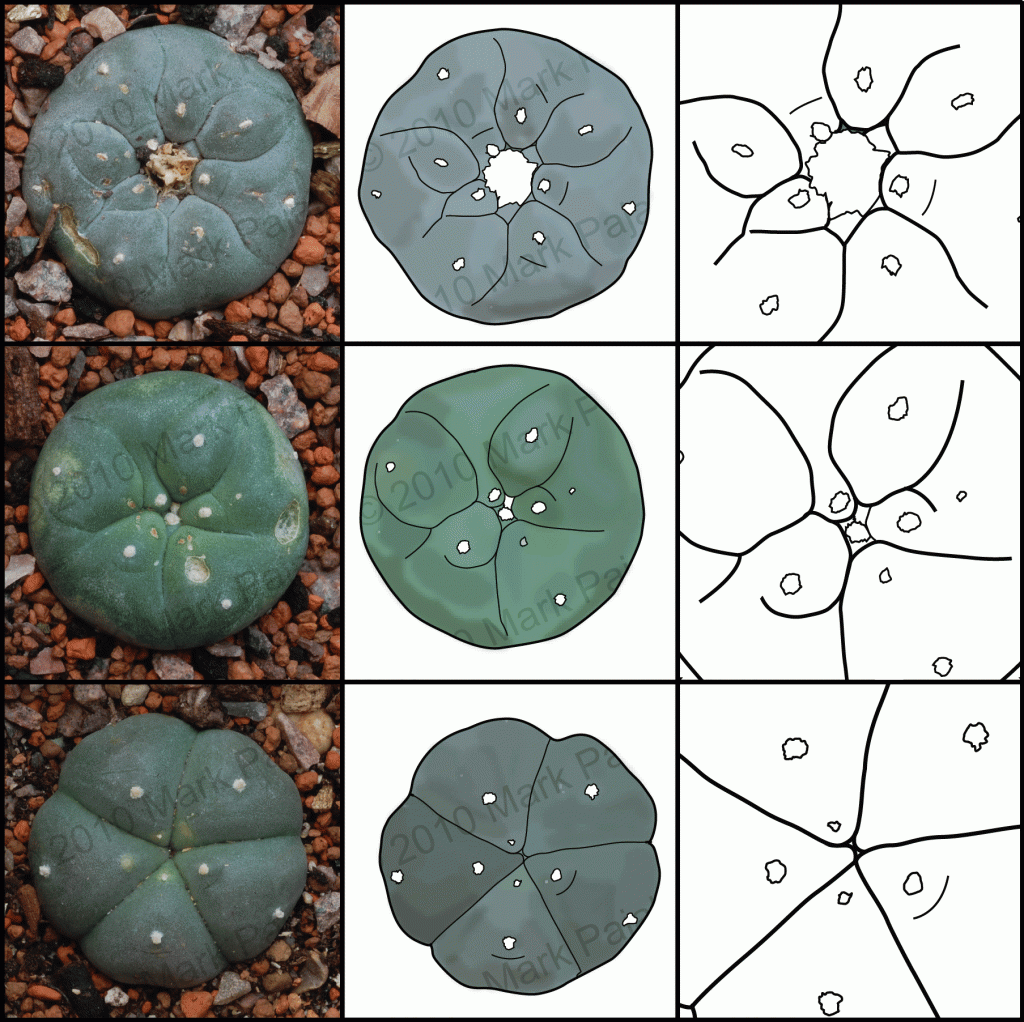
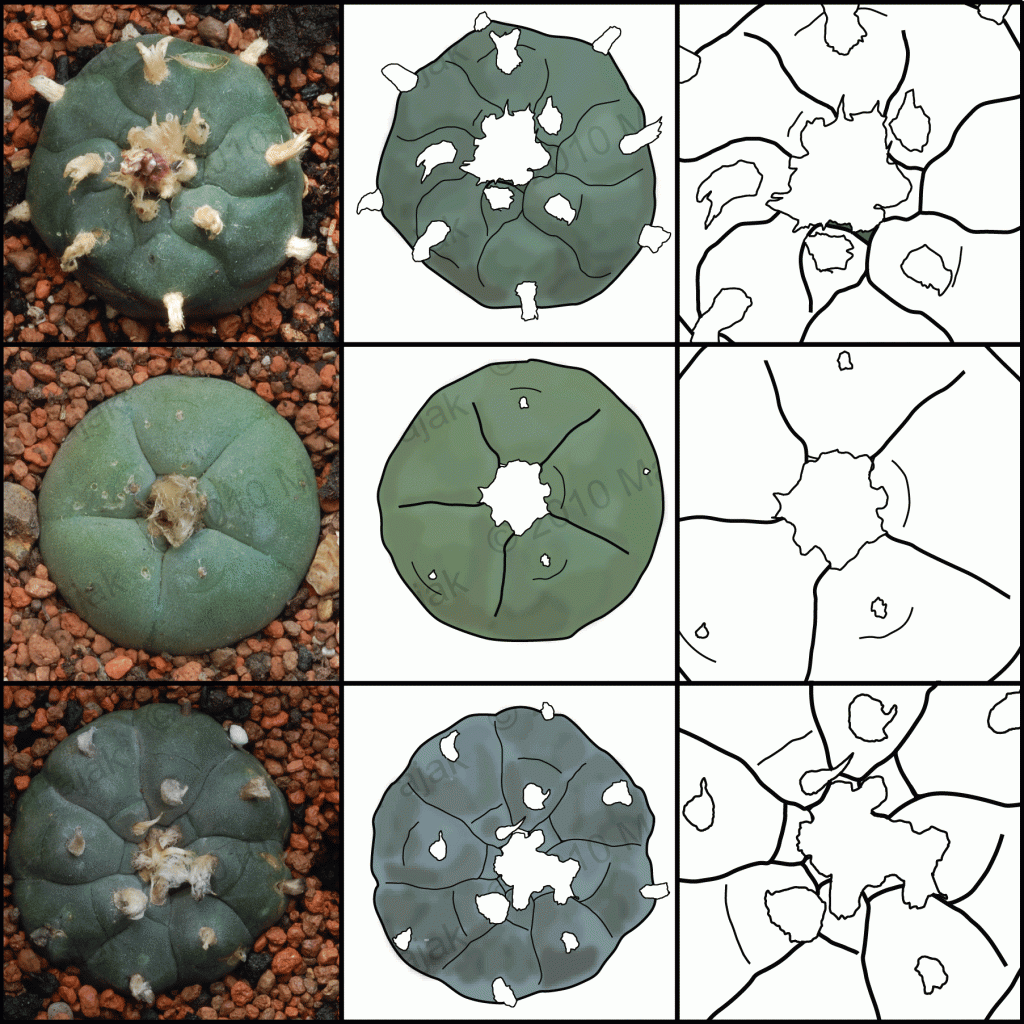
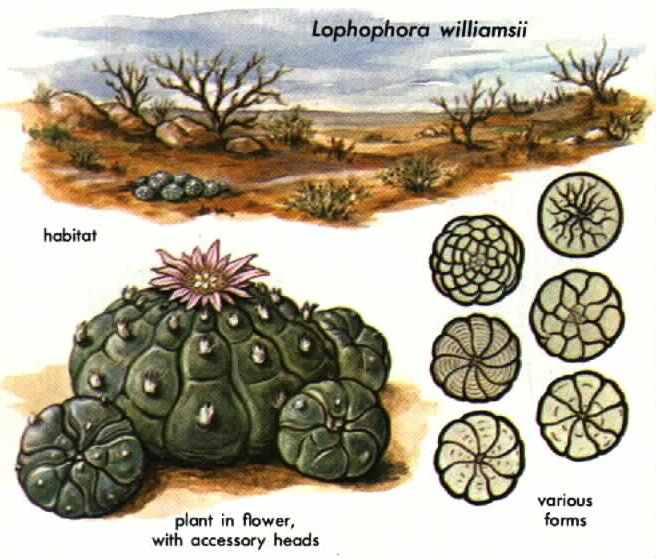
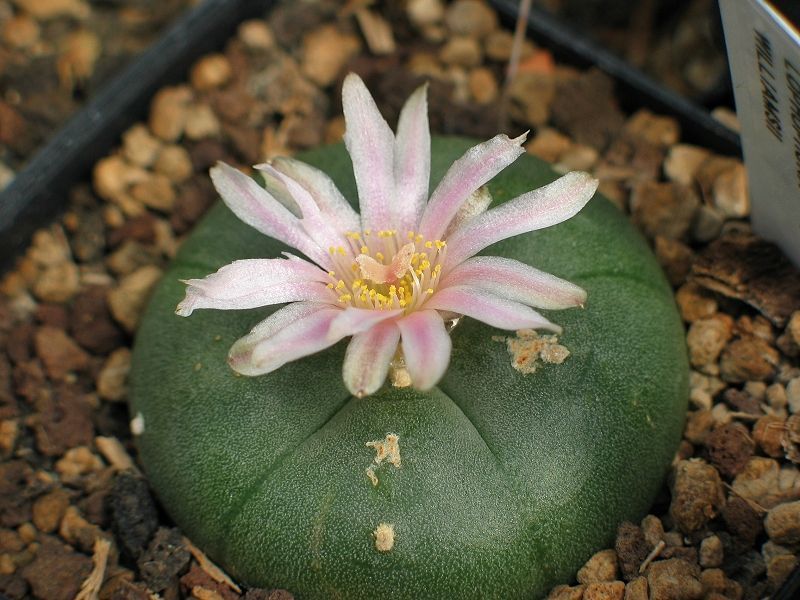
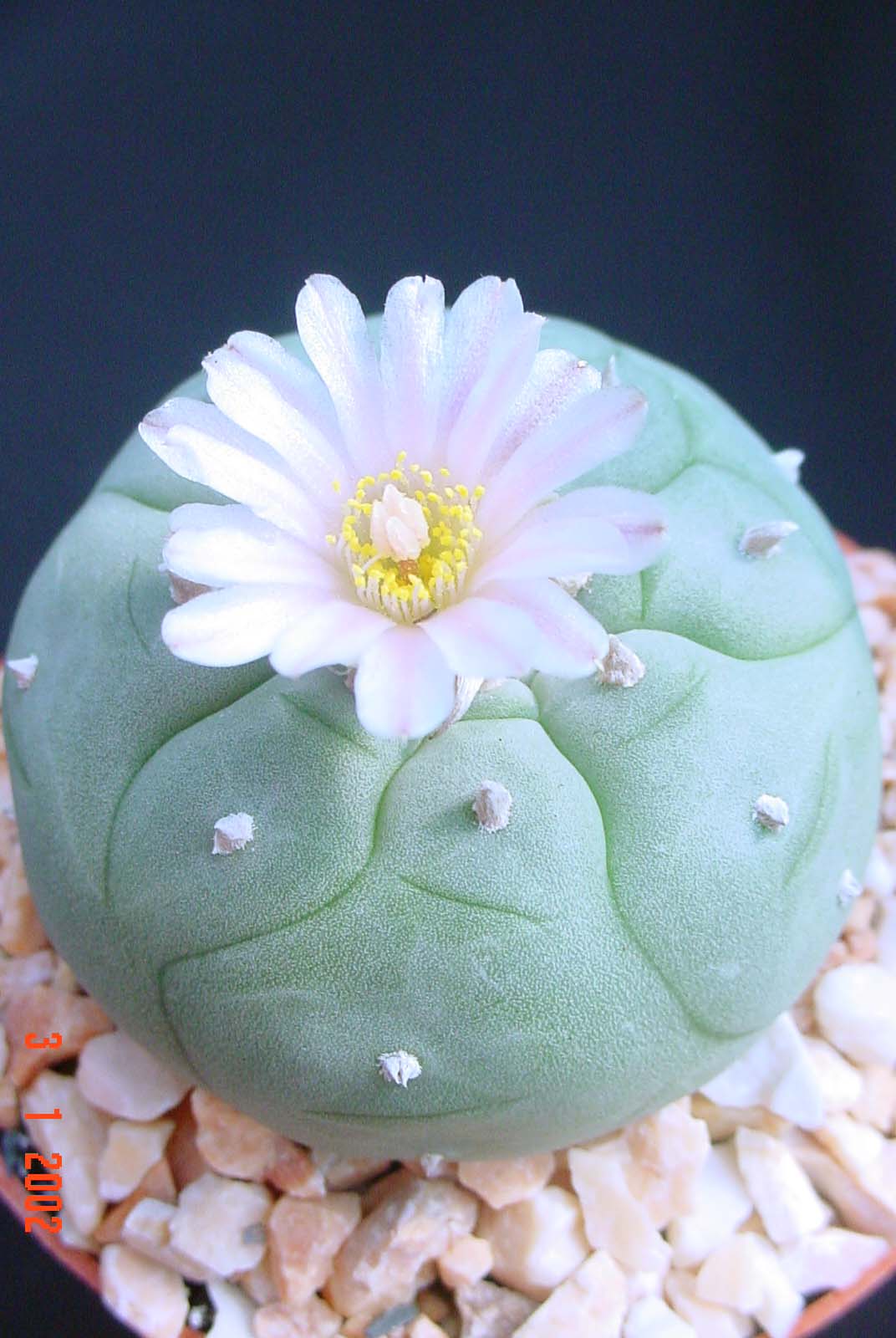
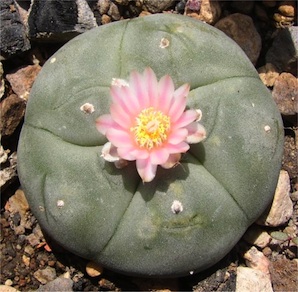
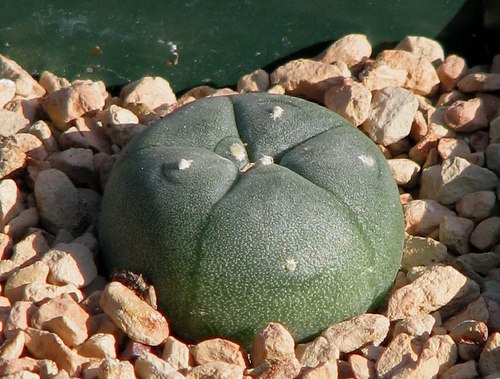
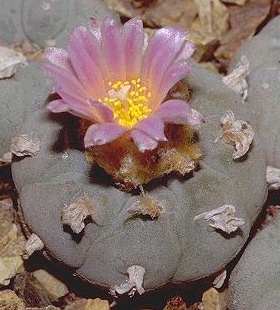
Lophophora Williamsii is a small, grey-green, spineless, napiform cactus possessing remarkable narcotic properties8 rarely exceeding fifteen centimeters in length and five or six in diameter at the top. The chlorophyll-bearing crown is less than one quarter the length of the plant. Peyote plants are normally unicephalous, but age and injury may cause them to become polycephalous, assuming bizarre shapes, often resembling a deerhoof imprint, a circumstance which may account for the close association of peyote with the deer in Mexican Indian mythology.9 The crown is divided into from five to thirteen broad, rounded ribs, separated by straight or spiral furrows. Transverse grooves may divide the ribs into a number of low, polyhedral tubercles, each bearing an areola from which grows a tuft of matted hairs. These tufts of greyish-white, wooly hairs give a lanuginous appearance to the plant which is of importance in etymological considerations.10 The flowers, varying from red to pink or white, are borne on the apical areolae at the top of the crown during June and July. When the crowns of peyote are cut off and dried, they form the so-called mescal buttons which are eaten in the ceremony.
Lophophora Williamsii is not a rare plant. It grows on both banks of the Rio Grande and in scattered places in Aguas Calientes, Chihuahua, Coahuila, Hidalgo, Jalisco, Nuevo Léon, Querétaro, San Luis Potosí, Tamaulipas, and Zacatecas. The Indians of Mexico and the southern plains make annual “pilgrimages” to gather it. Those tribes too distant to visit the peyote-fields procure their supplies by mail from merchants in lower Texas who deal exclusively in mescal buttons.
The narcotic properties of peyote have attracted wide attention. Peyote-intoxication is divisible into two general phases: a period of contentment and over-sensitivity, and a period of nervous calm and muscular sluggishness, often accompanied by hypocerebrality, colored visual hallucinations, and abnormal synæsthesiæ.11 11. Cushny, Pharmacology and Therapeutics; W. E. Dixon, Physiological Action of the Alkaloids; Guttmann, Artificial Psychoses; Hare, Caspari, and Rusby, National Dispensatory; Rouhier, La plante qui fait les yeux émerveillés; Schultes, Peyote (Lophophora Williamsii [Le make] Coulter) and its Uses; Wood, Remington, and Sadtler, Dispensatory.
The pharmacological literature is scattered and voluminous. Since the bibliography of this paper is not intended to be a complete reference list to peyote literature, but merely the most pertinent, only the more important pharmacological sources have been included. 12. Beringer, Meskalinrausch; Guttmann, Artificial Psychoses; Klüver, Mescal. 13. Klüver, Mescal. 14. Beringer, Meskalinrausch; Fernberger, Further Observations. Alterations in tactile sensation, very slight muscular incoordination, disturbances in space and time perception, and auditory hallucinations may accompany severe peyote-intoxication.12 The most striking characteristic, however, is the occasionally induced peyote vision which is often fantastically colored.13
Peyote-intoxication is unique in that during it consciousness is not lost, control of the limbs and senses is maintained, there is no tendency to commit acts of violence, and seldom do uncomfortable effects accompany or follow it. These characteristics are reported in the literature, and I have observed them in the field.
Many investigators agree that peyote is not a habit-forming narcotic. Its use is productive of little social and moral degradation or physical harm, notwithstanding statements to the contrary. The assertions so often made concerning its aphrodisiac properties have been disproved. Furthermore, there is experimental evidence which suggests that it is definitely anaphrodisiacal.14
The narcotic and medicinal properties of peyote are traceable to active principles contained in the tissues of the plant. From four to eight alkaloids may be present in varying amounts and proportions: mescaline, anhalonine, anhalonidine, pellotine, lophophorine, anhalamine, anhalinine, and anhalidine.15 15. Schultes, Peyote (Lophophora Williamsii [Lemaire] Coulter) and its Uses. Several of the alkaloids of Lophophora Williamsii have found minor uses in modern medicine.
In the ceremony, peyote is eaten dry, but occasionally fresh plants are consumed.16 16. Shonle (Peyote) states: “Lumholtz does not emphasize the visions in his accounts of the Tarahumare and Huichol, probably because these tribes obtain the fresh peyote used by the more northern tribes and which has therefore caused the dance to be the central feature of the ceremony rather than the quiet meditation andvisions. But wherever the dried peyote is used, the vision predominates.” in this connection, it must be pointed out that dried peyote is used in Mexico and that I have not been able to discover any difference in physiological action between the fresh and the dried peyote. Since the anhalonium alkaloids are non-volatile, it is not to be expected that desiccation of the plant tissue would have any effect on their concentration. Therefore, the difference in expression of peyote worship in Mexico and the United States cannot be attributed to a physiological effect of the plant, but, it seems to me, must be due to the ceremonial background into which peyote was naturalized in the Plains culture area. 17. Mooney, Mescal Plant Ceremony. 18. Diguet, Les cactacées utiles. 19. V. A. Reko, Magische Gifte-, Rausch- und Genussmittel. 20. Benedict, Visions in Plains Culture. The dried mescal buttons keep indefinitely and are stored in bags for use. They possess a very bitter taste, but in spite of this, they are chewed and swallowed in great number by peyotists. The smallest consumption by a single person is about four buttons at each meeting. It is impossible to estimate the largest, but I have seen an Indian eat more than thirty at one ceremony. Other investigators17 report doses as large as ninety buttons. An estimate of the average consumption, however, would probably be about twelve buttons by each person at a single meeting.
Occasionally, mescal buttons are steeped in water, and the resulting “peyote tea” is drunk. This tea is widely used both in the ceremony and in daily life when peyote is administered medicinally. In Mexico, fresh peyote is ground on a metate, and the resulting thick brown liquid is drunk.18 Mexican Indians sometimes add peyote, thus prepared, to alcoholic fruit juices to produce a delirious intoxication.19 This use of Lophophora Williamsii, however, should not lead to its confusion with mescal, the alcoholic Agave-brandy prepared from Agave spp.
The emphasis on the curing powers of peyote is as great among the northern Indians who use it as it is among the Indians of Mexico. The Kiowa and Comanche, for example, the earliest recipients of peyote on the plains, rely on the cactus as a panacea. Among the Oklahoma tribes with which I worked, I found that there is hardly a disease which is not believed to be curable with peyote. Some of the ills listed as responding to peyote were tuberculosis, pneumonia, scarlet fever, intestinal ills, diabetes, rheumatic pains, colds, grippe, fevers, and venereal diseases. Among the Kiowa, partly masticated mescal buttons are packed around an aching tooth. The Delaware also practice this type of dental therapy.39 39. Petrullo, Diabolic Root. A Shawnee informed me that peyote tea was a good antiseptic wash for open wounds and a soothing liniment if applied warm to an aching limb. It is used “as white man uses aspirin.” Mooney observed: “I have also seen an Indian eat one between meals as a sort of appetizer.”40 40. Mooney, Mescal Plant Ceremony. Several mescal buttons are given three times during childbirth among the Kiowa, Kickapoo, Shawnee, and probably other Plains tribes. The frequent use of peyote as a medicine has led to the statement that the plant is employed as a habit-narcotic, but field investigators deny that this is so
View of base of crown (the central perforation is for stringing for transportation).
An historical survey of the peyote cult in America indicates that, with few exceptions, the first peyote leader of a tribe was converted as the result of a cure and not through a quest for visions. Once converted, he usually tried to impress his friends with the remarkable virtues of the new plant. From a position of indifference or actual hostility, many of the first advocates of the peyote cult became ardent supporters of the religion centering around it. These advocates, likewise, encountered strong opposition from the older and more conservative elements in the tribe. With such powerful forces to fight, peyote leaders would naturally make use of the most influential recommendations that peyote possessed. In the healing power of Lophophora Williamsii, the peyotists found an appeal which completely swept aside conservative opposition and paved the way for rapid acceptance of the plant and its cult. Radin has emphasized this as follows:
In the early days of the peyote cult, it appears that Rave relied principally for new converts upon the knowledge of the great curative virtue of the peyote. The main point, apparently, was to induce people to try it, and I hardly believe that any amount of preaching of its direct effects, such as the hyper-stimulation induced, the glorious visions, and the feeling of relaxation following, would ever have induced prominent members of the medicine bands to do so. For that reason, it is highly significant that all the older members of the peyote speak of the diseases of which it cured them. Along this line lay unquestionably its appeal for the first converts.42 42. Radin, Peyote Cult of the Winnebago.
Of the records of early peyote leaders, only one (John Wilson) indicates that the vision was considered as an appeal, and, in Wilson’s case, the curative properties of peyote were stressed as much, if not more, than the vision. Elk Hair, who simultaneously with John Wilson introduced peyote to the Delaware, consistently refused to eat peyote, although he was critically ill. Finally, however, he submitted to the pleas of friends to have a peyote ceremony for his recovery. The “cure” was successful, and Elk Hair became an ardent peyotist.43 43. Petrullo, Diabolic Root.
Wilson introduced a slightly different type of ceremony to the Delaware. He was not converted through a cure, but became acquainted with peyote through a deliberate effort to learn its virtues. He went into seclusion and spent several weeks in a continuous peyote intoxication, during which time he was “continually translated in spirit to the sky-realm where he was conducted by peyote.”44 44. Speck, Notes on the Life of John Wilson.
The Wilson ceremony is dominant among the Delaware today, and Petrullo feels that the reason for the failure of Elk Hair’s ceremony was due to the fact that “he preached the old religion, and offered only another medico-religious cult,” whereas Wilson “brought to his people a new religion, a hope of building anew, a definite severance with the past.” This may be true to a slight extent, but it is clear that Delaware peyotism, like that of other American Indian tribes, is essentially a medico-religious cult. Petrullo calls attention to this fact himself when he says:
Thus, the peyotist subjects himself to the peyote intoxication, to prayer and concentration on religious matters for twelve and eighteen hours for the sake of helping a fellow man. By concerted effort, by attaining purity, by appealing to peyote, the devotees hope to win the attention of the spirit-forces and their intercession for the sick person. The personal enlightenment and other benefits that may come to one in the course of the meeting are merely incidental in relation to the major objective of effecting a cure.
This statement suggests that the element of curing and health is fundamental to Delaware peyotism.
Wilson himself considered peyote a great medicine, although his own conversion was not through a cure.
[He] approved the use of native herbal remedies, saying that they would do good, but he pointed out that as the peyote worshipper progressed in knowledge, he could ignore the effects of the native pharmacopeia and effect his cures upon himself and others by the sole use of peyote.45 45. Speck, Notes on the Life of John Wilson.
Rave preached about the healing properties of peyote while introducing it among the Winnebago. Like other early peyotists, he had experienced visions, but did not consider them fundamental. Radin emphatically stated:
The first and foremost virtue preached by Rave for the peyote was its curative power. He gives a number of instances in which hopeless venereal diseases and consumption were cured by its use; and this to the present day is the first thing one hears about.46 46. Radin, Peyote Cult of the Winnebago.
This appeal of Lophophora Williamsii as a medicine may be duplicated in almost every tribe regarding whose peyote ceremony sufficient is known. Among the Kickapoo, Kiowa, Shawnee, and Wichita, I heard constant references to the fact that early peyote leaders in the tribes had experienced the curative powers of the plant and had taught of its medicinal virtues.
It is true that the therapeutic appeal is as vital and as influential today as it was fifty years ago. Many of the young peyote devotees whom I interviewed are sincere in their belief in the supremacy of peyote as a medicine. Their faith in the plant extends far beyond its value as a physical medicament, and the enthusiasm with which they described cure after cure indicated clearly that conditions have changed little in this respect from the early days of the cult. Many who stray away from the peyote religion return to its folds in times of sickness and remain faithful when health is restored. La Barre47 47. La Barre, Autobiography of a Kiowa Indian. reports the case of a boy who, having left the peyote cult in his youth, returned to it during sickness twenty years later. This is probably not uncommon and it serves to illustrate once again the importance of the belief in peyote as a guardian and restorer of health.

Description: Globular spineless cactus with large tap root.
Stem: Pale grey-green to yellow-green, usually lacking well defined ribs and furrows.
Ribs: 5 to 13 the podaria are rarely elevated, but are broad and flat.
Areoles: With tufts of hairs that usually spread unequally on the prominent podaria.
Flowers: Commonly pale to dark pink ( or rarely pinkish white), reaching over 4 centimeter in diameter.

In habitat Lophophora fricii is a very mutable species. It´s hardly to find two similar plants at one location. Particularly in terms of the bloom they are different at the same locations.

Propagation: Seeds. Seeds should be sown in spring in sterile cacti mix. Cover with a humidity dome or plastic wrap and leave in a warm spot in 50-75% shade. Fluctuating temperatures are best (ie. high day temperature and low night temperature) as they simulate the desert environment. Keep constantly humid as seedlings cannot survive if to dry. Seedlings will emerge in 7-21 days and can be grown in the same environment for a number of months. Mulch with thin layer of small quartz gravel (1-2mm diameter) this helps them stay upright, hinders algae growth and regulates moisture. As they get older the watering can become less frequent. Potting up can be done when 5-10mm in diameter.

Cultivation:
Slow growing.
Because of the tap root they are very rot prone, so use highly gritty compost with much drainage. Requires half shade to part sun. Watering: watering should be rather infrequent to keep the plant compact and avoid it becoming excessively elongated and unnatural in appearance. Watering it properly is often difficult, because this plant tends to crack open or rot if over-watered. The fact that the plant retracts into the soil and assumes a grey-green colouring between watering, is perfectly natural, and doesn’t cause any damage.
Overwatering:
Keep completely dry and cool in winter (An unheated greenhouse would be perfect) or when night temperatures remain below 10° C, it can survive low temperatures (appr. -7°C) for a short period. Assure a good ventilation.

PEYOTE (lophophora williamsii), an unobtrusive cactus that grows in rocky deserts, is the most spectacular hallucinogenic plant of the New World. It is also one of the earliest known. The Aztecs used it, calling it peyotl.
Peyote is a small, fleshy, spineless cactus with a rounded gray-green top, tufts of white hair, and a long carrotlike root. It rarely exceeds 7-1/2 inches in length or 3 inches across. The Indians cut off the crowns to sun-dry into brown, discoidal "mescal buttons" that last long periods and can be shipped to distant points for use. When the top is severed, the plant often sprouts new crowns so that many-headed peyotes are common
To graft Peyote, choose a fast growing collumnular cacti as the grafting stock. Most collumnular cacti will be fine, but Trichocereus pachanoi and Myrtillocactus geometrizans are both excellent choices because they are fast growing, water tolerant, and reasonably spineless. Unless you have no choice, do not use stock plants grown from seed. They often taper at the base, and may topple once used for grafting, rooted cuttings from these plants will be far more stable.

Perform a flat graft on Peyote. Under optimum conditions, the graft will heal within days and new growth may be seen within weeks (although this may take considerably longer). As with other slow growing cacti, grafted Peyote may become bloated or mishaped due to increased growth rate. Once your grafted Peyote has reached flowering size and possibly has side pups, you may wish to remove the Peyote scion from the stock and reroot it on it's own roots for a beautifully productive parent plant.
Soil Mixtures

Peyote will do well in any free draining compost mix. Although to promote flowering it is recommended to add Gypsum or Dolomite. Calcium is also thought to benefit Peyote. A good mix would be:


USE OF PEYOTE BY THE AZTECS was described by Spanish chroniclers. One reported that those who ate it saw frightful visions and remained drunk for two or three days; that it was a common food of the Chichimeca Indians, "sustaining them and giving them courage to fight and not feel fear nor hunger nor thirst; and they say that it protects them from all danger." In 1591, another chronicler wrote that the natives who eat it "lose their senses, see visions of terrifying sights like the devil, and are able to prophesy their future with 'satanic trickery.' "
Dr. Hernández, the physician to the King of Spain, described the cactus as Peyotl zacatecensis and wrote of its "wonderful properties." He took note of its small size and described it by saying that "it scarcely issues from the earth, as if it did not wish to harm those who find and eat it." Recent archaeological finds of peyote buttons in the state of Texas are approximately 1 ,000 years old. OPPOSITION TO THE USE OF PEYOTE by the Aztecs was strong among the Spanish conquerors. One early Spanish church document likened the eating of peyote to cannibalism. Upset by the religious hold that peyote had on the Indians, the Spanish tried, with great vigor but little success, to stamp out its use.
By 1720, the eating of peyote was prohibited throughout Mexico. But despite four centuries of civil and ecclesiastical persecution, the use and importance of peyote have spread beyond its early limited confines. Today it is so strongly anchored in native lore that even Christianized Indians believe that a patron saint—El Santo Niño de Peyotl—walks on the hills where peyote grows.
There is continuing opposition in certain religious organizations in the United States to the Indians' use of peyote as a ceremonial sacrament. Nevertheless, the federal government has never seriously questioned or interfered with the practice since it is essentially a religious one. Those tribes living far from sources of peyote—some as far north as Canada—can legally import mescal buttons by mail. Despite constitutional guarantees separating church and state, however, a few states have enforced repressive laws against even the religious use of peyote

RELIGIOUS IMPORTANCE OF PEYOTE persists among the Tarohumare, Huichol, and other Mexican Indians. The Tarahumare believe that when Father Sun left earth to dwell above, he left peyote, or hikuli, to cure man's ills and woes; thot peyote sings and talks as it grows; that when gathered it sings happily in its bags all the way home; and that God speaks through the plant in this way.
Many legends about the supernatural powers of peyote underlie its religious importance. It might be esteemed merely as an everyday medicine, but it hos been exalted to a position of near-divinity. The peyote-collecting trip of the Huichols, for example, is highly religious, requiring pilgrims to forego adult experiences, especially sexual, for it reenacts the first peyote quest of the divine ancestors. The pilgrims must confess in order to become spirit and enter into the sacred country through the gateway of clashing clouds, a journey which, according to their tradition, repeats the "journey of the soul of the dead to the underworld

Luxuriant visual- and auditory hallucinations, alteration in space- and time perception, sensations of weightlessness, macropsia, depersonalisation. Mescaline has stimulating effects in lower- and sedative effects in higher doses.
Autonomic changes: nausea, pupillary dilation, increased pulse rate and blood pressure, elevated body temperature, profuse sweating, tremor and the threshold for elicitation of the knee jerk is decreased.

Duration:

The effects appear within two hours after ingestion and last for four to twelve hours.

Dosage and preparation:

The chlorophyllous part of the cactus (buttons) should be cut from the root and can be chewed fresh, or in their dried state, but it can also be prepared as a tea.

4-30 buttons produce psychedelic effects. Fresh peyote contains 0.4 % mescaline per weight, dried buttons 2.74-3.7%. Mescaline itself is fysiologically active between 200-500mg.

Botanical aspects:

L. Williamsii belongs to Cactaceae; Cactoideae, Tribus Cerereae, subtribus Echinocacteninae. It is indigenous to central Mexico and teritory noth to southern Texas and New Mexico. Peyote is a small gray-green desert cactus, which has tufts of cotton like material instead of thorns. Its white/pink flowers appear from the centre of the top and after pollination pink seed capsules appear. Reproduction follows through seeds. Seed germination requires a humid, warm environment (18-25 °C) and may last up to several weeks

Peyote was first described botanically in 1845 and called Echinocactus williamsii. It has been given many other technical names. The one used most commonly by chemists has been Anhalonium lewinii. Most botanists now agree peyote belongs in a distinct genus, Lophophora. There are two species: the widespread L. williamsii and the local L. diffusa in Querétaro.
Peyote is native to the Rio Grande valley of Texas and northern and central parts of the Mexican plateau. It belongs to the cactus family, Cactaceae, comprising some 2,000 species in 50 to 150 genera, native primarily to the drier parts of tropical America. Many species are valued as horticultural curiosities, and some have interesting folk uses among the Indians

EFFECTS OF PEYOTE on the mind and body are so utterly unworldly and fantastic that it is easy to understand the native belief that the cactus must be the residence of spirit forces or a divinity. The most spectacular of the many effects is the kaleidoscopic play of indescribably rich, colored visions. Hallucinations of hearing, feeling, and taste often occur as well.
The intoxication may be divided into two periods: one of contentment and extrasensitivity, followed by artificial calm and muscular sluggishness at which time the subject begins to pay less attention to his surroundings and increase his introspective "meditation.' Before visions appear, some three hours after eating peyote, there are flashes and scintillations in colors, their depth and saturation defying description. The visions often follow a sequence from geometric figures to unfamiliar and grotesque objects that vary with the individual.
Though the colored visual hallucinations undoubtedly underlie the rapid spread of the use of peyote, especially in those Indian cultures where the quest for visions has always been important, many natives assert that visions are "not good" and lack religious significance. Peyote's reputation as a panacea and all-powerful "medicine" - both in physical and psychic sense - may be equally responsible for its spread.

USE OF PEYOTE IN THE UNITED STATES first came to public attention about 1880 when the Kiowa and the Comanche Indians established a peyote ceremony derived from the Mexican but remodeled into a visionquest ritual typical of the Plains Indians. Use of peyote had been recorded earlier, in 1720, in Texas. How the use of peyote diffused from Mexico north, far beyond the natural range of the cactus, is not fully known. During the 1880's, many Indian missionaries were active in spreading the peyote ceremony from tribe to tribe. By 1920, the peyote cult numbered over 13,000 faithful in more than 30 tribes in North America. It was legally organized, partly for protection against fierce Christian - missionary persecution, into the Native American Church, which now claims 250,000 members. This cult, a combination of Christian and native elements, teaches brotherly love, high moral principles, and abstention from alcohol. It considers peyote a sacrament through which God manifests Himself to man.THE PEYOTE RITUAL as practiced by Indians in the United States varies somewhat from tribe to tribe. A typical Plains Indian ceremony takes place weekly in an all-night meeting in a teepee. Worshipers sit in a circle around a half-moon altar of sand (see p. 6) on which a large specimen called a "Father Peyote" is set and at which a sacred fire burns. The ashes are shaped into the form of a thunderbird. The ceremony, led by a "roadman,'' consists of chanting accompanied by rattle and drum, alternating with prayers, lessons, testimonies, and occasionally a curing ritual. At night dried peyote tops (mescal buttons) are moistened and swallowed—from 4 to 30 or more. The ritual ends with breakfast at down when the teepee is hauled down
A PEYOTE VISION was described by a scientist who experienced it as follows: " . . . clouds . . . Oil of pheasant turns into bright yellow star; star into sparks. Moving, scintillating screw; hundreds of screws. A sequence of rapidly changing objects in agreeable colors. A rotating wheel in the center of a silvery ground . . . The upper part of a man with a pale face and red cheeks, rising slowly from below. While I am thinking of a friend, the head of an Indian appears. Beads in different colors . . . so bright that I doubt my eyes are closed.... Yellow moss like saltwater taffy pierced by two teeth. Silvery water pouring downward, suddenly flowing upward . . . exploding shells turn into strange flowers . . . A drawing of a head turns into a mushroom, then a skeleton in lateral view . . . Head and legs are lacking . . . Soft, deep darkness with moving wheels and stars in . . . pleasant colors. Nuns in silver dress . .. quickly disappearing. Collection of bluish ink bottles with labels. Red, brownish, and violet threads running together in the center. Autumn leaves turning into mescal buttons . . . Man in greenish velvet jumping into a deep chasm. Strange animal turns into a piece of wood in horizontal position."

THE CHEMISTRY OF PEYOTE is extremely interesting and is still subject to intense study by chemists and pharmacologists. More than 30 active constituents have been found in the peyote tissues. They are mainly alkaloids of two types: phenylethylamines and isoquinolines. Much pharmacological and psychological research hos been done on mescaline, the alkaloid responsible for the colored visions, but the effects of most of the other constituents, alone or in combination, are not well understood

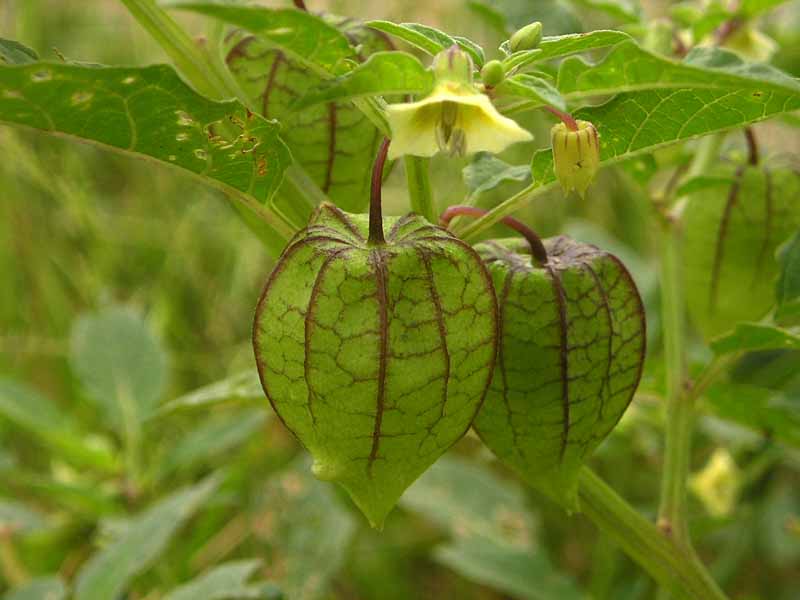
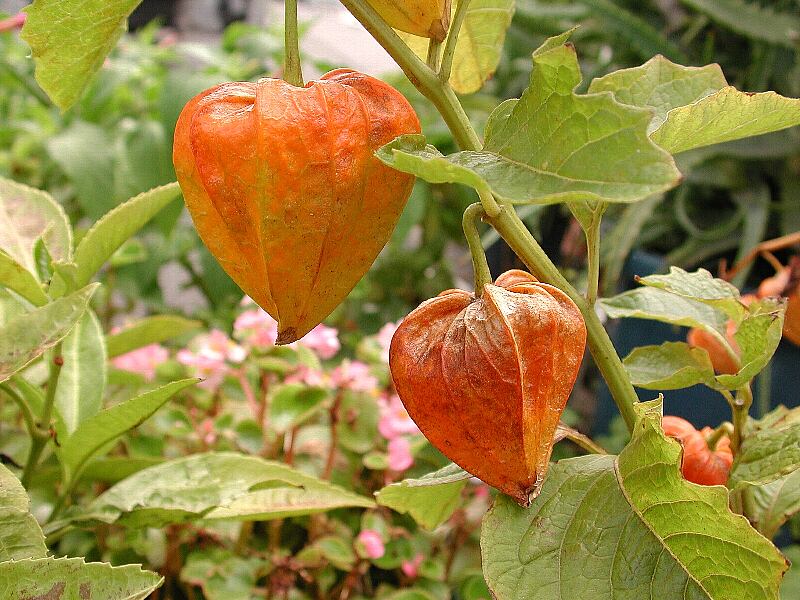
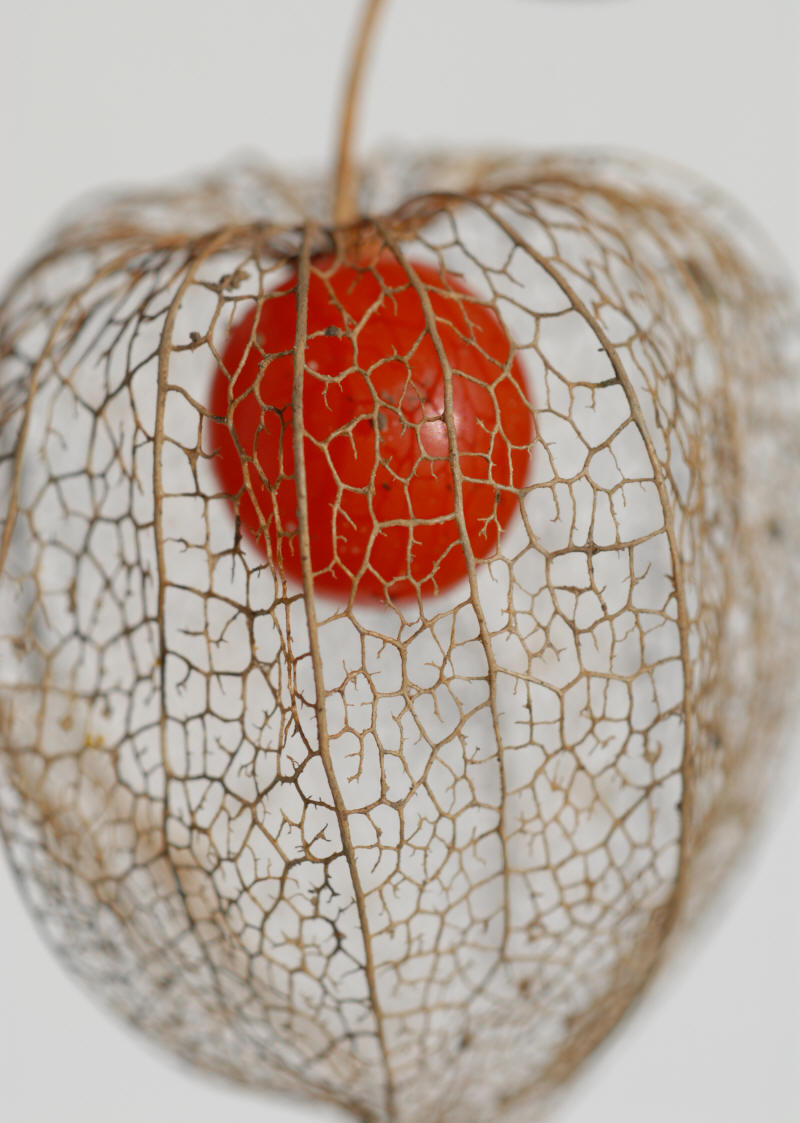
Cape gooseberry(Physalis peruvianus)-Tomatillo (Physalis ixocarpa 'Rendidora')-Physalis(Physalis Alkekengi') کاکنج یا عروسک پس پرده


How to grow Chinese Lanterns: Direct sow in garden in prepared soil in June or just barely cover indoors in peat pellets in March/April. Germinates in 14-30 days at 71-75F/22-24C. You can also try growing this like tomato, from transplanted germinated with warmth. Transplant to 18-24" apart. Grow in dappled sunlight/light woodland shade. It gets 24-30"/60-75cm tall. More lanterns are produced when the plant is not crowded, has rich soil, and gets sufficient sun, but full sun is usually too much for it. This plant spreads by underground runners that you can divide in the spring. Chinese lanterns can be aggressive, so grow it in a container if you don't want it taking over your garden, or you can surround it with grassy areas. However, this same invasiveness makes it a good groundcover. Slugs enjoy the young plants, so watch out for them. This plant is a perennial in zones 3-10 (-40F/-40C)

Closely related to the tomato, this purplish fruit is a common feature in many Mexican meals and salsas. Not until cooked does their aroma fully enfold
The sweetly scented berries of this plant are considered a delicacy
Growing instructions
Sow early spring indoors. Pot up the seedlings into individual pots as soon as the first true leaf appears and plant them out after the last expected frosts.

گیاهی است علفی و به ارتفاع 20 تا 60 سانتی متر که به حالت خودرو در زمینهای آهکی مزارع و بوستانها می روید دارای ساقه راست و زاویه دار به رنگ مایل به قرمز و برگهائی متناوب بادمبرگ دراز، بیضوی ، نوک تیز نامنظم و به رنگ سبز تیره دارد. گلهای آن که در فاصله ماههای خرداد، شهریور ظاهر می شود. معمولاً دارای وضع منفرد بر روی ساقه است و در راس دمگلی کوتاه و خمیده ظاهر می گردد. مادگی گلهای آن شامل تخمدانی ، بیضوی بی کرک و دو خانه می باشد و پس از رسیدن به میوه ای به صورت سته، به رنگ قرمز به بزرگی یک گیلاس و محصور در پرده ای قرمز رنگ تبدیل می گردد. این پرده که از بهم پیوستن و رشد کاسه گل بوجود می آید ظاهر زیبا به گیاه می بخشد. در داخل میوه این گیاه نیز دانه های متعدد کوچک، مسطح به رنگ مایل به سفید جای دارد. زمان گلدهی

فاصله ماههای خرداد تا شهریور تکثیر گیاه

پرورش عروسک پشت پرده بدین طریق است که دانه گیاه را ابتدا در قشری از خاک مرطوب و مناسب می کارند و پس از آنکه گیاه جوان حاصل شد آنرا به محل اصلی انتقال می دهند زمین های دارای آهک نسبتاً کافی برای پرورش آن مناسبند.

Overview

Physalis, also known as physalis angulata, physalis capsicifolia, mullaca, cape gooseberry and winter cherry, is an herb used in many diverse areas of the world. According to an online article published in the "Tropical Plant Database," physalis has been used medicinally in Colombia, Brazil, Peru, Taiwan, the West Indies and Jamaica, among other places across the globe. Though physalis is a flowering herbal plant, it is primarily the sap, stems, leaves, fruit and roots that are used for medicinal purposes. Physalis is purportedly used around the world for its anti-bacterial, anti-viral, anti-cancer and immune-modulator properties. It is considered safe to consume, but more controlled medical research is necessary to fully establish the efficacy and safety of physalis.

Tribal Uses

According to the "Tropical Plant Database," tribal uses for physalis in remote, wooded areas and rainforest areas is especially significant in Colombia, Brazil, Peru, the West Indies and Jamaica, where modern medical care is generally limited and not accessible. However, physalis is reportedly commonly used in these regions as a sort of panacea to treat asthma, malaria, as a pain reliever, to treat earaches, liver problems such as hepatitis, rheumatism, gonorrhea, fever, infertility, to prevent miscarriages, and to help heal post-partum infections. Tribal medicine is often based on trial and error, word of mouth and legend, rather than scientific medical facts, as is the case with modern medicine found in other parts of the world. It is important to consult a physician before taking physalis to prevent allergic reactions or any interference with other medications.

Modern Uses

Modern uses vary from country to country, including Taiwan using physalis to treat cancer, urinary insufficiency, fever, and liver diseases such as hepatitis, and Japan, which uses physalis to treat fever, colds, strep throat, swelling and urinary insufficiency. However, physalis use in the U.S. is limited by the fact that there is inadequate human research to prove the efficacy and safety of the herb, though animal studies reportedly indicate it is safe for human use. Few American controlled studies have been performed on this seemingly versatile herbal remedy.

Potential

Due to the overwhelming global use of physalis for a multitude of ailments, the medicinal potential for physalis appears to loom large. The few animal studies done as of 2010 have shown no toxic effects from physalis. However, until more medical research is done on this valuable herb, its potential may go unrealized in Western modern medicine.

Contraindications

It is important to note that preliminary studies reportedly show that the active ingredients in physalis are powerful flavonoids and alkaloids. Physalis may cause bleeding and should not be taken by people on blood thinners and hemophiliacs. Also, physalis may interfere with certain medications such as cardiac medications, especially those that lower blood pressure.
The physalis fruit is also known as the cape gooseberry, goldenberry or ground cherry. It is native to South America, but has been introduced to Hawaii and Australia and can be grown in California. The physalis berry is surrounded by a golden husk called a calyx, and the actual ripe fruit usually resembles a small tomato. Physalis is an excellent source of dietary fiber and vitamin C, according to Specialty Produce. Despite its exotic appearance, physalis is very easy to eat